Google

Google's Phone App Is Getting the Power To Send Spam Calls Straight To Voicemail (9to5google.com) 85

According to 9to5Google, Google's dialer app for Pixel, Nexus, and Android One devices is being upgraded with the ability to send spam calls straight to voicemail. "In 2016, the app began alerting users to potential spam callers by flashing the incoming call screen bright red, with another 'Suspected spam caller' alert just underneath the phone number," reports 9to5Google. The new spam filtering feature goes a step further. From the report: [U]sers will not receive a missed call or voicemail notification, though filtered calls will appear in call history and any voicemails left will still show up in that respective tab. This feature is rolling out worldwide over the next few weeks, but those who join the new beta will have initial access to it. Like its other programs, Google notes that the test allows you to use experimental features before they're released. Google warns that features will still be in-development, might be unstable, and have "a few problems." Meanwhile, users will have the ability to submit in-app feedback throughout the process. Head to the Google Play listing for the Phone app and scroll down to "Become a tester" in order to join.
AMD

AMD Releases Spectre v2 Microcode Updates for CPUs Going Back To 2011 (bleepingcomputer.com) 54

Catalin Cimpanu, writing for BleepingComputer: AMD has released CPU microcode updates for processors affected by the Spectre variant 2 (CVE-2017-5715) vulnerability. The company has forwarded these microcode updates to PC and motherboard makers to include them in BIOS updates. Updates are available for products released as far as 2011, for the first processors of the Bulldozer line. Microsoft has released KB4093112, an update that also includes special OS-level patches for AMD users in regards to the Spectre v2 vulnerability. Similar OS-level updates have been released for Linux users earlier this year. Yesterday's microcode patches announcement is AMD keeping a promise it made to users in January, after the discovery of the Meltdown and Spectre (v1 and v2) vulnerabilities.
Microsoft

Microsoft Removes Antivirus Registry Key Check for All Windows Versions (bleepingcomputer.com) 49

Microsoft has decided to remove a mandatory "registry key requirement" it introduced in the aftermath of the Meltdown and Spectre vulnerability disclosure. BleepingComputer: Microsoft used this registry key to prevent Windows updates from being installed on computers running antivirus software incompatible with the Meltdown and Spectre patches. Antivirus vendors were supposed to create this registry key on users' computers to signal that they've updated their product and will not interfere with Microsoft's patches. This was a big issue because incompatible antivirus products would crash and BSOD Windows systems. [...] The OS maker removed the registry key check for Windows 10 computers last month, in March, and has announced yesterday that the key is no longer necessary for other Windows operating system versions -- 7, 8, 8.1, Server 2008, and Windows Server 2012.
Businesses

FTC Warns Manufacturers That 'Warranty Void If Removed' Stickers Break the Law (vice.com) 143

schwit1 writes: The Federal Trade Commission put six companies on notice today, telling them in a warning letter that their warranty practices violate federal law. If you buy a car with a warranty, take it a repair shop to fix it, then have to return the car to the manufacturer, the car company isn't legally allowed to deny the return because you took your car to another shop. The same is true of any consumer device that costs more than $15, though many manufacturers want you to think otherwise.

Companies such as Sony and Microsoft pepper the edges of their game consoles with warning labels telling customers that breaking the seal voids the warranty. That's illegal. Thanks to the 1975 Magnuson-Moss Warranty Act, no manufacturer is allowed to put repair restrictions on a device it offers a warranty on. Dozens of companies do it anyway, and the FTC has put them on notice. Apple, meanwhile, routinely tells customers not to use third party repair companies, and aftermarket parts regularly break iPhones due to software updates.

United States

Emergency Alert Systems Used Across the US Can Be Easily Hijacked (helpnetsecurity.com) 44

A vulnerability affecting emergency alert systems supplied by ATI Systems, one of the leading suppliers of warning sirens in the USA, could be exploited remotely via radio frequencies to activate all the sirens and trigger false alarms. From a report: "We first found the vulnerability in San Francisco, and confirmed it in two other US locations including Sedgwick County, Wichita, Kansas," Balint Seeber, Director of Threat Research at Bastille, told Help Net Security. "Although we have not visited other locations to confirm the presence of the vulnerability, ATI Systems has customers in the US and overseas from the military, local government, educational and energy sectors.

"ATI features customers on its website around the US including One World Trade Center, WestPoint Military Academy and Entergy Nuclear Indian Point which are all in New York State, UMASS Amherst in Massachusetts, Eastern Arizona College, University of South Carolina and Eglin Air Force Base in Florida, amongst others." The vulnerability stems from the fact that the radio protocol used to control the sirens is not secure: activation commands are sent "in the clear," i.e. no encryption is used.

Mozilla

Firefox Follows Chrome and Blocks the Loading of Most FTP Resources (bleepingcomputer.com) 89

Mozilla says it will follow in the steps of Google Chrome and start blocking the loading of FTP subresources inside HTTP and HTTPS pages. From a report: By FTP subresources, we refer to files loaded via the FTP protocol inside img, script, or iframe tags that have a src="ftp://". FTP links placed inside normal angle bracket links or typed directly in the browser's address bar will continue to work. The reasoning is that FTP is an insecure protocol that doesn't support modern encryption techniques and will inherently break many other built-in browser security and privacy features, such as HSTS, CSP, XSA, or others. Furthermore, many malware distribution campaigns often rely on compromising FTP servers and redirecting or downloading malware on users' computers via FTP subresources. Mozilla engineers say FTP subresource blocking will ship with Firefox 61, currently scheduled for release on June 26.
Facebook

Some Facebook Employees Are Quitting or Asking To Switch Departments Over Ethical Concerns (businessinsider.com) 208

Some dissatisfied Facebook engineers are reportedly attempting to switch divisions to work on Instagram or WhatsApp, rather than continue work on the platform responsible for the Cambridge Analytica scandal, according to a recent report from the New York Times. An anonymous reader writes: Many believe Facebook should have done more to handle the data responsibly, and the events that followed increased scrutiny against Facebook, reportedly taking a toll on employees working on the platform. Since the news came out, CEO Mark Zuckerberg and COO Sheryl Sandberg have spoken to the media on a few occasions, but it was days before the company commented on the scandal, which it now estimates around 87 million total users affected. Then, a leaked memo from Facebook executive Andrew Bosworth written in 2016 revealed a "growth at all costs" mentality that put Facebook in a position to be held responsible for the situation it's found itself in. As it became evident that Facebook's core product might be to blame, engineers working on it reportedly found it increasingly difficult to stand by what it built.
Security

Linux: Beep Command Can Be Used to Probe for the Presence of Sensitive Files (bleepingcomputer.com) 109

Catalin Cimpanu, writing for BleepingComputer: A vulnerability in the "beep" package that comes pre-installed with Debian and Ubuntu distros allows an attacker to probe for the presence of files on a computer, even those owned by root users, which are supposed to be secret and inaccessible. The vulnerability, tracked as CVE-2018-0492, has been fixed in recent versions of Debian and Ubuntu (Debian-based OS). At its core, the bug is a race condition in the beep utility that allows the OS to emit a "beep" sound whenever it is deemed necessary. Security researchers have discovered a race condition in the beep package that allows an attacker to elevate his code to root-level access.
Chrome

Biometric and App Logins Will Soon Be Pushed Across the Web (vice.com) 161

Soon, it will be much easier to log into more websites using a hardware key plugged into your laptop, a dedicated app, or even the fingerprint scanner on your phone. Motherboard: On Tuesday, a spread of organizations and businesses, including top browser vendors such as Microsoft and Google, announced a new standards milestone that will streamline the process for web developers to add extra login methods to their sites, potentially keeping consumers' accounts and data more secure. "For users, this will be a natural transition. People everywhere are already using their fingers and faces to 'unlock' their mobile phones and PCs, so this will be natural to them -- and more convenient," Brett McDowell, executive director at the FIDO Alliance, one of the organizations involved in setting up the standard, told Motherboard in an email.

"What they use today to 'unlock' will soon allow them to 'login' to all their favorite websites and a growing number of native apps that already includes Bank of America, PayPal, eBay and Aetna," he added. Passwords continue to be one of the weaker points in online security. A hacker may phish a target's password and log into their account, or take passwords from one data breach and use them to break into accounts on another site. The login standard, called Web Authentication (WebAuthn), will let potentially any website or online service use apps, security keys, or biometrics as a login method instead of a password, or use those alternative approaches as a second method of verification. The key here is making it easy and open for developers to use, and for it to work across all different brands of browsers. The functionality is already available in Mozilla's Firefox, and will be rolled out to Microsoft's Edge and Google Chrome in the new few months. Opera has committed to supporting WebAuthn as well.

Youtube

YouTube Hack: Several High-Profile Videos Mysteriously Disappear From Platform, Some Defaced 158

Several high-profile music videos on YouTube were mysteriously deleted early Tuesday, in what appears like the result of a security compromise. Some of the videos that have been pulled from Google's video platform include Luis Fonsi and Daddy Yankee's "Despacito" -- which is also the most popular video on the platform. Users reported Tuesday that the thumbnail of the video was replaced by a masked gang holding guns, who identify themselves as "Prosox and Kuroi'sh." Several songs from DJ Snake, Drake, Katy Perry, Selena Gomez, Shakira, and Taylor Swift have also been either deleted or altered with. On Twitter, a person who claims to be one of the hackers, said, "@YouTube Its just for fun i just use script "youtube-change-title-video" and i write "hacked" don t judge me i love youtube." Google has yet to acknowledge the incident. Further reading: BBC.
Security

Don't Give Away Historic Details About Yourself (krebsonsecurity.com) 158

Brian Krebs: Social media sites are littered with seemingly innocuous little quizzes, games and surveys urging people to reminisce about specific topics, such as "What was your first job," or "What was your first car?" The problem with participating in these informal surveys is that in doing so you may be inadvertently giving away the answers to "secret questions" that can be used to unlock access to a host of your online identities and accounts. I'm willing to bet that a good percentage of regular readers here would never respond -- honestly or otherwise -- to such questionnaires (except perhaps to chide others for responding). But I thought it was worth mentioning because certain social networks -- particularly Facebook -- seem positively overrun with these data-harvesting schemes. What's more, I'm constantly asking friends and family members to stop participating in these quizzes and to stop urging their contacts to do the same.

On the surface, these simple questions may be little more than an attempt at online engagement by otherwise well-meaning companies and individuals. Nevertheless, your answers to these questions may live in perpetuity online, giving identity thieves and scammers ample ammunition to start gaining backdoor access to your various online accounts.

Facebook

Steve Wozniak Drops Facebook: 'The Profits Are All Based On the User's Info' (arstechnica.com) 246

Apple cofounder Steve Wozniak has formally deactivated his Facebook account. In an email interview with USA Today, Wozniak wrote that he was no longer satisfied with Facebook, knowing that it makes money off of user data. "The profits are all based on the user's info, but the users get none of the profits back," he wrote. "Apple makes its money off of good products, not off of you. As they say, with Facebook, you are the product." Ars Technica reports: His Sunday announcement to his Facebook followers came just ahead of Facebook CEO Mark Zuckerberg's scheduled testimony before Congress on Tuesday. The CEO is also reportedly set to meet with members of Congress privately on Monday. Wozniak wrote that Facebook had "brought me more negatives than positives." Still, when Wozniak tried to change some of his privacy settings in the aftermath of Cambridge Analytica, he said he was "surprised" to find out how many categories for ads he had to remove. "I did not feel that this is what people want done to them," added Wozniak. "Ads and spam are bad things these days and there are no controls over them. Or transparency."
The Internet

A Broken Undersea Cable Knocked Mauritania Offline For Two Days, Affected Another Five Nations (fortune.com) 36

The West African nation of Mauritania lost all internet access for 48 hours due to an undersea cable break, according to infrastructure analysts. From a report: The break, which took place a couple weeks ago, provides a reminder of how much internet users rely on the cables that connect their countries. According to Dyn, the Oracle-owned internet performance firm, the African Coast to Europe (ACE) cable was cut near Noukachott in Mauritania on March 30. It's not clear what caused the break, but six countries entirely rely on that one cable for their connectivity, and all -- Sierra Leone, Mauritania, Liberia, Guinea-Bissau, Guinea and the Gambia -- saw a big impact. The impact in Mauritania was the worst, with its two-day outage, while Sierra Leone also had big problems. The latter country also had a big outage on April 1, but that may well have been down to government action -- African governments are notorious for interfering with citizens' internet access, particularly around election time or during periods of unrest.
Privacy

'Big Brother' In India Requires Fingerprint Scans For Food, Phones, Finances (nytimes.com) 132

The New York Times reports of the Indian government's intent to build an identification system of unprecedented scope. The country is reportedly "scanning the fingerprints, eyes and faces of its 1.3 billion residents (alternative source) and connecting the data to everything from welfare benefits to mobile phones." Here's an excerpt from the report: Civil libertarians are horrified, viewing the program, called Aadhaar, as Orwell's Big Brother brought to life. To the government, it's more like "big brother," a term of endearment used by many Indians to address a stranger when asking for help. For other countries, the technology could provide a model for how to track their residents. And for India's top court, the ID system presents unique legal issues that will define what the constitutional right to privacy means in the digital age. The government has made registration mandatory for hundreds of public services and many private ones, from taking school exams to opening bank accounts.

Technology has given governments around the world new tools to monitor their citizens. In China, the government is rolling out ways to use facial recognition and big data to track people, aiming to inject itself further into everyday life. Many countries, including Britain, deploy closed-circuit cameras to monitor their populations. But India's program is in a league of its own, both in the mass collection of biometric data and in the attempt to link it to everything -- traffic tickets, bank accounts, pensions, even meals for undernourished schoolchildren.

IT

Ask Slashdot: Are Companies Under-Investing in IT? 325

Long-time Slashdot reader johnpagenola writes: In the middle 1970's I had to choose between focusing on programming or accounting. I chose accounting because organizations were willing to pay for good accounting but not for good IT.

Forty years later the situation does not appear to have changed. Target, Equifax, ransomware, etc. show pathetically bad IT design and operation. Why does this pattern of underinvestment in and under-appreciation of IT continue?

Long-time Slashdot reader dheltzel argues that the problem is actually bad hiring practices, which over time leads to lower-quality employees. But it seems like Slashdot's readership should have their own perspective on the current state of the modern workplace.

So share your own thoughts and experiences in the comments. Are companies under-investing in IT?
Security

'Vigilante Hackers' Strike Routers In Russia and Iran, Reports Motherboard (vice.com) 121

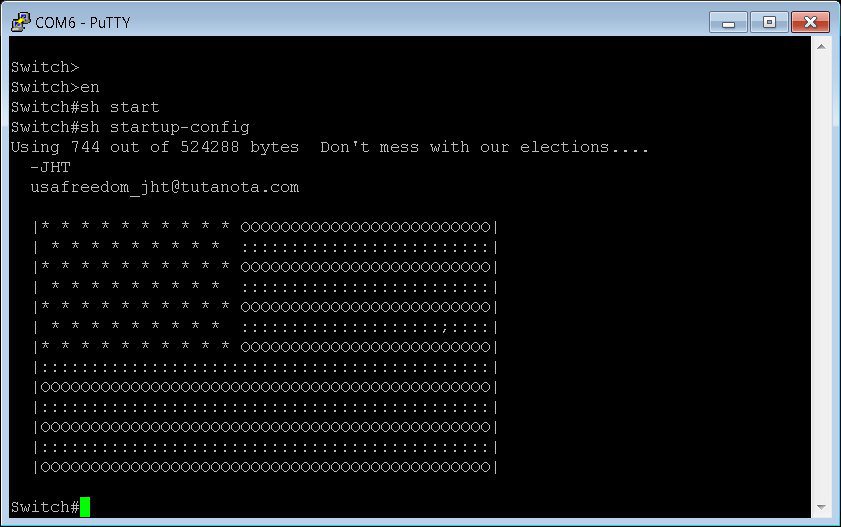
An anonymous reader quotes Motherboard: On Friday, a group of hackers targeted computer infrastructure in Russia and Iran, impacting internet service providers, data centres, and in turn some websites. "We were tired of attacks from government-backed hackers on the United States and other countries," someone in control of an email address left in the note told Motherboard Saturday... "We simply wanted to send a message...." In addition to disabling the equipment, the hackers left a note on affected machines, according to screenshots and photographs shared on social media: "Don't mess with our elections," along with an image of an American flag...

In a blog post Friday, cybersecurity firm Kaspersky said the attack was exploiting a vulnerability in a piece of software called Cisco Smart Install Client. Using computer search engine Shodan, Talos (which is part of Cisco) said in its own blog post on Thursday it found 168,000 systems potentially exposed by the software. Talos also wrote it observed hackers exploiting the vulnerability to target critical infrastructure, and that some of the attacks are believed to be from nation-state actors...

Reuters reported that Iran's IT Minister Mohammad Javad Azari-Jahromi said the attack mainly impacted Europe, India, and the U.S.... The hackers said they did scan many countries for the vulnerable systems, including the U.K., U.S., and Canada, but only "attacked" Russia and Iran, perhaps referring to the post of an American flag and their message. They claimed to have fixed the Cisco issue on exposed devices in the US and UK "to prevent further attacks... As a result of our efforts, there are almost no vulnerable devices left in many major countries," they claimed in an email.

Their image of the American flag was a black-and-white drawing done with ASCII art.
Open Source

Torvalds Opposes Tying UEFI Secure Boot to Kernel Lockdown Mode (phoronix.com) 69

An anonymous reader quotes Phoronix: The kernel lockdown feature further restricts access to the kernel by user-space with what can be accessed or modified... Pairing that with UEFI SecureBoot unconditionally is meeting some resistance by Linus Torvalds. The goal of kernel lockdown, which Linus Torvalds doesn't have a problem with at all, comes down to "prevent both direct and indirect access to a running kernel image, attempting to protect against unauthorised modification of the kernel image and to prevent access to security and cryptographic data located in kernel memory, whilst still permitting driver modules to be loaded." But what has the Linux kernel creator upset with are developers trying to pair this unconditionally with UEFI SecureBoot. Linus describes Secure Boot as being "pushed in your face by people with an agenda." But his real problem is that Secure Boot would then imply Kernel Lockdown mode... "Tying these things magically together IS A BAD IDEA."
Security

T-Mobile Stores Part of Customers' Passwords In Plaintext, Says It Has 'Amazingly Good' Security (vice.com) 71

T-Mobile Austria admitted on Twitter that it stores at least part of their customer's passwords in plaintext. What this means is that "if anyone breaches T-Mobile (it's only a matter of time), they could likely guess or brute-force every user's password," reports Motherboard. "If the passwords were fully encrypted or hashed, it wouldn't be that easy. But having a portion of the credential in plaintext reduces the difficulty of decoding the hashed part and obtaining the whole password." From the report: "Based on what we know about how people choose their passwords," Per Thorsheim, the founder of the first-ever conference dedicated to passwords, told me via Twitter direct message, "knowing the first 4 characters of your password can make it DEAD EASY for an attacker to figure out the rest." T-Mobile doesn't see that as a problem because it has "amazingly good security." On Thursday, a T-Mobile Austria customer support employee made that stunning revelation in an incredibly nonchalant tweet. Twitter user Claudia Pellegrino was quick to point out that storing passwords in plaintext is wrong, but another T-Mobile customer rep didn't see it that way. "I really do not get why this is a problem. You have so many passwords for every app, for every mail-account and so on. We secure all data very carefully, so there is not a thing to fear," the rep wrote back.
Security

Best Buy Warns of Data Breach (usatoday.com) 25

Best Buy, along with Delta Air Lines and Sears, says that [24]7.ai, a company that provides the technology backing its chat services, was hacked between September 27 and October 12, potentially jeopardizing the personal payment details of "a number of Best Buy customers." The electronics company said in a statement that "as best we can tell, only a small fraction of our overall online customer population could have been caught up in this... incident whether or not they used the chat function." They will reach out to customers who were impacted.
Communications

Russia Files Lawsuit To Block Telegram Messaging App (reuters.com) 70

Russia's state communications watchdog, Roskomnadzor, has filed a lawsuit to block Telegram in the country because the instant messaging company has refused to hand over the encryption keys that would allow Russian authorities to read messages sent using the service. From a report: Ranked as the world's ninth most popular mobile messaging app, Telegram is widely used in countries across the former Soviet Union and Middle East. Active users of the app reached 200 million in March. As part of its services, Telegram allows users to communicate via encrypted messages which cannot be read by third parties, including government authorities. But Russia's FSB Federal Security service has said it needs access to some messages for its work, including guarding against terrorist attacks. Telegram has refused to comply with its demands, citing respect for user privacy.

Slashdot Top Deals