Japan

Japan's ARM-Based Supercomputer Leads World In Top500 List; Exascale Expected In 2021 (techtarget.com) 25

dcblogs writes: Japan's Fugaku ARM-based supercomputer is the world's most powerful in the latest Top500 list, setting a world record of 442 petaflops. But this was otherwise an unremarkable year for supercomputers, with a "flattening performance curve," said Jack Dongarra, one of the academics behind the twice-a-year ranking and director of the Innovative Computing Laboratory at the University of Tennessee. This is a result of Moore's Law slowing down as well as a slowdown in the replacement of older systems, he said. But the U.S. is set to deliver an exascale system -- 1,000 petaflops -- next year and China as well. Meanwhile, the EU has a 550 petaflop system in development in Finland. "On the Top500 list, the second-ranked system was IBM Power Systems at nearly 149 petaflops using its Power9 CPUs and Nvidia Tesla GPUs. It is at the Oak Ridge National Lab in Tennessee," adds TechTarget.

"Third place went to Sierra supercomputer, which also uses Power9 and Nvidia GPUs, at about 95 petaflops. It is at Lawrence Livermore National Laboratory in Livermore, Calif."
Advertising

Microsoft Is Showing Windows 10 Users Full-Screen Ads For Its Edge Browser (windowslatest.com) 148

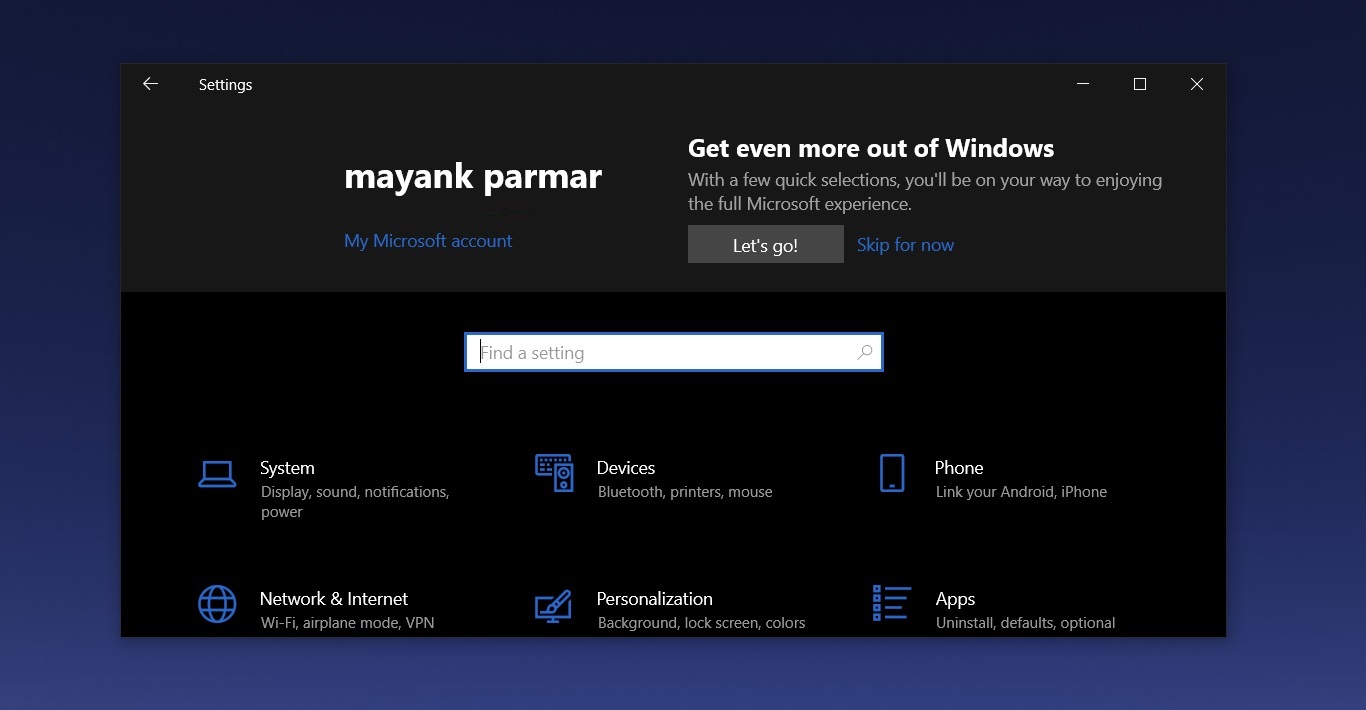
According to Windows Latest, "Microsoft is A/B testing a new feature that is designed to nag users with fullscreen window-less Microsoft Edge recommendations in the OOBE screen." From the report: The nag will appear when users set up their PC, sign in to their system after applying updates, or when they click on a new ad banner within the Settings. [...] Microsoft is trying to convince users of rival browsers who are visiting Windows Settings of the benefits of trying the Chromium Edge. In the Settings app, there's a new banner that appears to be rolling out to non-Insiders. As you can see in the above screenshot, the advert appears across the top of the Settings app window, just above the settings options.

The banner states that you can "get even more out of Windows" and it surprisingly launches the OOBE (out of the box experience) screen. [...] This ad appeared only when our devices were set to use Google Chrome and Firefox as the default web browser. The user can easily close the advert by clicking the second option "Don't update your browser settings." If you try to skip the setup, the pop-up will appear again in future. Unfortunately, you cannot permanently disable these recommendations in Windows 10.

Software

Demand For Employee Surveillance Increased As Workers Transitioned To Home Working (zdnet.com) 47

An anonymous reader quotes a report from ZDNet: A new study shows that the demand for employee surveillance software was up 55% in June 2020 compared to the pre-pandemic average. From webcam access to random screenshot monitoring, these surveillance software products can record almost everything an employee does on their computer. VPN review website Top10VPN used its global monitoring data to analyze over 200 terms related to employee surveillance software. It took into account both generic and brand-specific queries for its study which compared searches during March-May 2020 with internet searches in the preceding year. Global demand for employee monitoring software increased by 108% in April, and 70% in May 2020 compared with searches carried out the preceding year. Queries for "How to monitor employees working from home" increased by 1,705% in April and 652% in May 2020 compared with searches carried out the preceding year.

The surge in popularity of such an open-ended phrase like this reveals how unprepared many companies were for the abrupt shift to mass home-working. The most popular surveillance tools are Time Doctor, Hubstaff, and FlexiSPY. The tools with the biggest increase in demand include Teramind, DeskTime, Kickidler, and Time Doctor, with interest for the latter tripling compared to the pre-pandemic levels. The top three tools account for almost 60% of global demand in surveillance software because of the range of features offered. The radical shift away from office-working has clearly made employers nervous about a reduction in productivity and its potential impact on their business. Greater surveillance, however, may actually reduce long-term productivity. Your boss watching your every move may make you less productive in the long run and could significantly impact your feelings about the company itself.

Google

Google Will Make It Slightly Easier To Turn Off Smart Features (gizmodo.com) 15

"[I]n the coming weeks," Google will show a new blanket setting to "turn off smart features" which will disable features like Smart Compose, Smart Reply, in apps like Gmail; the second half of the same prompt will disable whether additional Google products -- like Maps or Assistant, for example -- are allowed to be personalized based on data from Gmail, Meet, and Chat. Gizmodo reports: Google writes in its blog post about the new-ish settings that humans are not looking at your emails to enable smart features, and Google ads are "not based on your personal data in Gmail," something CEO Sundar Pichai has likewise said time and again. Google claims to have stopped that practice in 2017, although the following year the Wall Street Journal reported that third-party app developers had freely perused inboxes with little oversight. (When asked whether this is still a problem, the spokesperson pointed us to Google's 2018 effort to tighten security.)

A Google spokesperson emphasized that the company only uses email contents for security purposes like filtering spam and phishing attempts. These personalization changes aren't so much about tightening security as they are another informed consent defense which Google can use to repel the current regulatory siege being waged against it by lawmakers. [...] Inquiries in the U.S. and EU have found that Google's privacy settings have historically presented the appearance of privacy, rather than privacy itself. [...] So this is nice, and also Google's announcement reads as a letter to regulators. "This new setting is designed to reduce the work of understanding and managing [a choice over how data is processed], in view of what we've learned from user experience research and regulators' emphasis on comprehensible, actionable user choices over data."

Twitter

Twitter Names Famed Hacker 'Mudge' as Head of Security (reuters.com) 14

Social media giant Twitter, under increased threat of regulation and plagued by serious security breaches, is appointing one of the world's best-regarded hackers to tackle everything from engineering missteps to misinformation. From a report: The company on Monday named Peiter Zatko, widely known by his hacker handle Mudge, to the new position of head of security, giving him a broad mandate to recommend changes in structure and practices. Zatko answers to CEO Jack Dorsey and is expected to take over management of key security functions after a 45- to 60-day review. In an exclusive interview, Zatko said he will examine "information security, site integrity, physical security, platform integrity -- which starts to touch on abuse and manipulation of the platform -- and engineering." Zatko most recently oversaw security at the electronic payments unicorn Stripe. Before that, he worked on special projects at Google and oversaw handing out grants for projects on cybersecurity at the Pentagon's famed Defense Advanced Research and Projects Agency (DARPA).
Google

Ok Google: Please Publish Your DKIM Secret Keys 108

Matthew Green, a cryptographer and professor at Johns Hopkins University, writes: The Internet is a dangerous place in the best of times. Sometimes Internet engineers find ways to mitigate the worst of these threats, and sometimes they fail. Every now and then, however, a major Internet company finds a solution that actually makes the situation worse for just about everyone. Today I want to talk about one of those cases, and how a big company like Google might be able to lead the way in fixing it. This post is about the situation with Domain Keys Identified Mail (DKIM), a harmless little spam protocol that has somehow become a monster. My request is simple and can be summarized as follows: Dear Google: would you mind rotating and publishing your DKIM secret keys on a periodic basis? This would make the entire Internet quite a bit more secure, by removing a strong incentive for criminals to steal and leak emails. The fix would cost you basically nothing, and would remove a powerful tool from hands of thieves.
Privacy

How the US Military Buys Location Data from Ordinary Apps (vice.com) 40

Joseph Cox, reporting for Motherboard at Vice: The U.S. military is buying the granular movement data of people around the world, harvested from innocuous-seeming apps, Motherboard has learned. The most popular app among a group Motherboard analyzed connected to this sort of data sale is a Muslim prayer and Quran app that has more than 98 million downloads worldwide. Others include a Muslim dating app, a popular Craigslist app, an app for following storms, and a "level" app that can be used to help, for example, install shelves in a bedroom. Through public records, interviews with developers, and technical analysis, Motherboard uncovered two separate, parallel data streams that the U.S. military uses, or has used, to obtain location data. One relies on a company called Babel Street, which creates a product called Locate X. U.S. Special Operations Command (USSOCOM), a branch of the military tasked with counterterrorism, counterinsurgency, and special reconnaissance, bought access to Locate X to assist on overseas special forces operations. The other stream is through a company called X-Mode, which obtains location data directly from apps, then sells that data to contractors, and by extension, the military.

The news highlights the opaque location data industry and the fact that the U.S. military, which has infamously used other location data to target drone strikes, is purchasing access to sensitive data. Many of the users of apps involved in the data supply chain are Muslim, which is notable considering that the United States has waged a decades-long war on predominantly Muslim terror groups in the Middle East, and has killed hundreds of thousands of civilians during its military operations in Pakistan, Afghanistan, and Iraq. Motherboard does not know of any specific operations in which this type of app-based location data has been used by the U.S. military. The apps sending data to X-Mode include Muslim Pro, an app that reminds users when to pray and what direction Mecca is in relation to the user's current location. The app has been downloaded over 50 million times on Android according to the Google Play Store, and over 98 million in total across other platforms including iOS, according to Muslim Pro's website.

Social Networks

Obama Says Social Media Companies 'Are Making Editorial Choices, Whether They've Buried Them in Algorithms or Not' (cnbc.com) 190

Former U.S. President Barack Obama said that the extent to which social media companies claim they "are more like a phone company than they are like The Atlantic" is not "tenable," he told the publication in an interview published Monday. From a report "They are making editorial choices, whether they've buried them in algorithms or not," the former president said in the interview. "The First Amendment doesn't require private companies to provide a platform for any view that is out there. At the end of the day, we're going to have to find a combination of government regulations and corporate practices that address this, because it's going to get worse. If you can perpetrate crazy lies and conspiracy theories just with texts, imagine what you can do when you can make it look like you or me saying anything on video. We're pretty close to that now." Obama's statement that social media platforms should be considered more like publishers than public utilities would have significant implications on how the companies are regulated.
China

Didi To Deliver First BYD Electric Cars to Drivers Within Months (bloomberg.com) 17

Didi Chuxing will begin rolling out an electric vehicle developed with BYD to its drivers in coming months, aiming to reduce costs throughout the world's largest ride-hailing network. From a report: The D1, the first model to have been built with ride-hailing in mind, will ship to the startup's leasing partners across several Chinese cities, according to Didi. Made by BYD, in which Warren Buffett's Berkshire Hathaway is the largest shareholder, the vehicle has power sliding doors and a driver-assistance system. Didi flagged as early as 2018 its intention to team up with car manufacturers to produce customized EVs for its ride-hailing service. The Chinese company that defeated Uber Technologies in China is hoping the EVs present a more efficient option than traditional fuel-guzzlers. It already hosts about a million electric vehicles, which can take advantage of a growing nationwide charging network, and operates as many as 60 million rides every day.
Transportation

BMW Demos a Powered Wingsuit That Can Fly 186 MPH (syfy.com) 90

Wingsuits normally create a wide surface area of fabric between a skydiver's legs and from their legs to their arms, substantially slowing their fall.

But to create a buzz for the unveiling of BMW's new iX3 electric SUV, the company's creative consultancy Designworks "has partnered up with Austrian stuntman Peter Salzmann to unveil a wicked-cool new electric powered wingsuit that can propel a brave human being up to speeds nearing 200 miles-per-hour," reports Syfy Wire: Over the years since non-powered wingsuits first hit the extreme sports scene, Salzmann had pondered over how to infuse wingsuits with sustainable propulsion and the ability to climb. He teamed up with engineers and creative consultants at BMW's Designworks studio to create a pair of chest-mounted electric impellers and a special wingsuit that would utilize them. Realizing that the optimum airflow would exist in front of the suit, and not behind, Salzmann and the BMW crew pivoted to this front-end arrangement employing two 5-inch, 25,000 rpm impellers inside an aerodynamic, economical air-inlet package that mirrors the legendary German automotive firm's aesthetic sensibilities. For safety measures, there is a dedicated on/off switch to fire it up, a two-finger throttle device, a minimal steering component, and an instant cutoff switch for emergency situations, like encountering a flock of wild geese leisurely flying south for the winter.

While not built for extended flights, but short hops instead, the suit's propellers pump out approximately 20 horsepower for roughly five minutes, far superior than a standard wingsuit, whose horizontal glide rate falls one meter for every three meters traveled horizontally. Non-powered wingsuits max out at about 62 mph, but when Salzmann punches the electric boost, he can attain speeds over 186 mph, in addition to gaining altitude instead of gradually losing it.

BMW has released a terrific video with footage showing a trio of stuntment flying in formation in their powered wingsuits over the Austrian Alps.
Social Networks

Kickstarter Mistakenly Emails Responses To Complaints From Seven Years Ago (bbc.com) 8

The BBC reports: Crowdfunding website Kickstarter has surprised some of its users by replying to complaints they made seven years ago.

Users who received responses to long-expired projects from 2013 took to Twitter to congratulate the company on its response times.

Kickstarter said the emails were "auto-generated in error... The emails folks received yesterday was due to an unfortunate human error while working on a clean-up task completely unrelated to the ticket from 2013," a company spokeswoman said.

"It's important to remember we are still a small team at Kickstarter and mistakes can happen."

Social Networks

MSNBC: Parler Does Censor, Removes Users, and Really Hates Trolling (msnbc.com) 187

For seekers of a right-leaning free-speech utopia, "Parler may turn out to be, in the end, a false refuge," warns Marc Ambinder at MSNBC: First — sorry, folks — Parler does censor. It removes users, regularly. It does not actually seem to tolerate hate speech, and because it's a much smaller platform, it might even be more efficient in finding and exorcising it than the social giants. Oh, and the founders really, really don't like trolling. This includes the sort of trolling that feeds the outrage cycles on Twitter, the trolling that includes scatology and expletives and "unrelated comments." [Parler also says they'll enforce their rules against obscene user names, any kind of pornography, and even the spamming of "people trying to speak" with "unrelated comments"] Also, dog poop. Parler doesn't like dog poop...

On Wednesday, [Parler CEO Dan Bongino], of all people, had to knock down what might have been Parler's first piece of conservative-on-conservative viral misinformation: a screenshot of a Fox News chyron alleging that George Soros was actually the owner of Parler. "Friends," Bongino wrote on Twitter (!), "This is a photoshopped image. THIS IS NOT REAL. There are people who are desperate to take down Parler who are spreading BS hoping you'll buy it. I OWN PARLER. This is the 4th or 5th time I've had to fight back against this stuff."

Sorry, Dan. It won't be the last.

Youtube

YouTube Criticized For Not Removing Post-Election Misinformation (nbcnews.com) 183

"YouTube is facing growing criticism for allowing election misinformation after it decided not to remove or individually fact-check videos that spread unfounded conspiracy theories alleging voter fraud," reports NBC News: While all internet platforms are struggling to contain the volume of misinformation since voting ended last week — and all have been criticized to some degree by researchers for their handling of the situation — YouTube has staked out a position that is less aggressive than its social media competitors, most notably Facebook and Twitter.

YouTube said before the election that it wouldn't allow videos that encourage "interference in the democratic process," but now, as state officials are working to certify vote tallies, the company said it wants to give users room for "discussion of election results," even when that discussion is based on debunked information. Somewhere in between those two policies it has decided to leave up videos challenging Joe Biden's election, and some have received millions of views.

"Is YouTube unable to contend with this material, meaning they lack resources? Or is it a lack of will?" asked Sarah Roberts, co-director of UCLA's Center for Critical Internet Inquiry and an associate professor of information studies. "I think one of those is probably more damning than the other, but they both have the same outcome of allowing propaganda material masquerading as news being distributed on their platform at a critical juncture for the American political cycle," Roberts said...

"There's a good chance YouTube's handling of this goes in the first sentence of every story about how social networks handled the 2020 election for the next several years," Casey Newton, a journalist who writes the technology newsletter Platformer, said in a tweet.

Google

Google Sued After Mobile Allowances Eaten Up By Hidden Data Transfers (theregister.com) 54

A Slashdot reader shared this report from the Register: Google on Thursday was sued for allegedly stealing Android users' cellular data allowances though unapproved, undisclosed transmissions to the web giant's servers...

The complaint contends that Google is using Android users' limited cellular data allowances without permission to transmit information about those individuals that's unrelated to their use of Google services... What concerns the plaintiffs is data sent to Google's servers that isn't the result of deliberate interaction with a mobile device — we're talking passive or background data transfers via cell network, here. "Google designed and implemented its Android operating system and apps to extract and transmit large volumes of information between Plaintiffs' cellular devices and Google using Plaintiffs' cellular data allowances," the complaint claims...

Android users have to accept four agreements to participate in the Google ecosystem: Terms of Service; the Privacy Policy; the Managed Google Play Agreement; and the Google Play Terms of Service. None of these, the court filing contends, disclose that Google spends users' cellular data allowances for these background transfers. To support the allegations, the plaintiff's counsel tested a new Samsung Galaxy S7 phone running Android, with a signed-in Google Account and default setting, and found that when left idle, without a Wi-Fi connection, the phone "sent and received 8.88 MB/day of data, with 94 per cent of those communications occurring between Google and the device." The device, stationary, with all apps closed, transferred data to Google about 16 times an hour, or about 389 times in 24 hours. Assuming even half of that data is outgoing, Google would receive about 4.4MB per day or 130MB per month in this manner per device subject to the same test conditions...

An iPhone with Apple's Safari browser open in the background transmits only about a tenth of that amount to Apple, according to the complaint... Vanderbilt University Professor Douglas C. Schmidt performed a similar study in 2018 — except that the Chrome browser was open — and found that Android devices made 900 passive transfers in 24 hours...

The complaint charges that Google conducts these undisclosed data transfers for further its advertising business, sending "tokens" that identify users for targeted advertising and preload ads that generate revenue even if they're never displayed.

GNOME

Ubuntu Patches Bug That Tricked Gnome Desktop Into Giving Root Access (arstechnica.com) 25

"Ubuntu developers have fixed a series of vulnerabilities that made it easy for standard users to gain coveted root privileges," reports Ars Technica: "This blog post is about an astonishingly straightforward way to escalate privileges on Ubuntu," Kevin Backhouse, a researcher at GitHub, wrote in a post published on Tuesday. "With a few simple commands in the terminal, and a few mouse clicks, a standard user can create an administrator account for themselves."

The first series of commands triggered a denial-of-service bug in a daemon called accountsservice, which as its name suggests is used to manage user accounts on the computer... With the help of a few extra commands, Backhouse was able to set a timer that gave him just enough time to log out of the account before accountsservice crashed. When done correctly, Ubuntu would restart and open a window that allowed the user to create a new account that — you guessed it — had root privileges...

The second bug involved in the hack resided in the GNOME display manager, which among other things manages user sessions and the login screen. The display manager, which is often abbreviated as gdm3, also triggers the initial setup of the OS when it detects no users currently exist. "How does gdm3 check how many users there are on the system?" Backhouse asked rhetorically. "You probably already guessed it: by asking accounts-daemon! So what happens if accounts-daemon is unresponsive....?"

The vulnerabilities could be triggered only when someone had physical access to, and a valid account on, a vulnerable machine. It worked only on desktop versions of Ubuntu.

"This bug is now tracked as CVE-2020-16125 and rated with a high severity score of 7.2 out of 10. It affects Ubuntu 20.10, Ubuntu 20.04, and Ubuntu 18.04..." reports Bleeping Computer.

They add that the GitHub security research who discovered the bugs "reported them to Ubuntu and GNOME maintainers on October 17, and fixes are available in the latest code."
Social Networks

Will Parler Spread Misinformation - or Just Segregate It Onto a Single App? (thehill.com) 308

"The rising popularity of alternative social media app Parler is raising concerns over the spread of misinformation and potential for radicalizing users on a platform that's taken a hands-off approach to regulating content," reports The Hill's reporter on technology policy: The app has been boosted by conservatives, surging since Election Day, as Republicans amp up allegations of anti-conservative bias from social media giants like Twitter and Facebook that have clamped down on pro-Trump election misinformation. Experts warn that a total lack of content moderation could prove harmful beyond creating political echo chambers and further spreading conspiracy theories. "Anytime you take a laissez faire approach to moderation — you say, 'anything goes' right up until actual threats of real world violence — that creates a huge space for some really problematic things to happen," said Bret Schafer, a fellow focusing on disinformation at the Alliance for Securing Democracy....

For those who have abandoned Twitter and Facebook in favor of Parler, it could create a new dynamic on the mainstream social media platforms. "The idea that these people are leaving those platforms and no longer trying to red pill individuals to see their conspiracy theories on large platforms like Facebook and Twitter, I think that's a good thing," said Jason Blazakis, director of the Center on Terrorism, Extremism, and Counterterrorism at the Middlebury Institute. He added that the shift to Parler could mean fewer people on Facebook and Twitter are "exposed to these ideas," and "migrating to more obscure platforms" may ultimately result in a smaller audience for misinformation....

Unchecked content also risks exploitation of misinformation by foreign actors, much like it did on U.S. social media platforms in 2016, said Saif Shahin, an assistant professor at American University's School of Communications. But he said Parler's success underscores that misinformation in the U.S. is now fundamentally a domestic problem.

"We have people in this country divided so sharply along partisan lines that they actively are seeking what we consider to be disinformation, but what they consider just one type of information," Shahin said. "It is a domestic problem, a social problem, within American society."

Long-time Slashdot reader shilly also shared a thread on Twitter from entrepreneur/activist Dave Troy (currently a TedX organizer) raising questions about Parler's funding. [UPDATE: The Wall Street Journal has now reported that Parler's backers include Robert Mercer and his daughter, "who have not disclosed their involvement," and who previously funded Cambridge Analytica.]

Troy also asserted that "a preliminary analysis of the first several thousand accounts on Parler shows that it is the usual Russia-aligned operatives that we in this space have tracked for years. This is a large-scale op aligned with Russian interests."

Within hours Russia's state-controlled media outlet "Russia Today" had published an article calling Troy an "unhinged conspiracy theorist."
Transportation

Uber In Talks To Sell ATG Self-Driving Unit To Aurora 21

Uber is reportedly in talks to sell its $7.25 billion self-driving car unit, Uber Advanced Technologies Group, to competing autonomous vehicle technology startup Aurora Innovation. TechCrunch reports: Aurora Innovation, the startup founded by three veterans of the autonomous vehicle industry who led programs at Google, Tesla and Uber, is in negotiations to buy Uber ATG. Terms of the deal are still unknown, but sources say the two companies have been in talks since October and it is far along in the process. The talks could falter. But if successful, they have the potential to triple Aurora's headcount and allow Uber to unload an expensive long-term play that has sustained several controversies in its short life.
Google

Google Is Reportedly Working On Linking Up Nest Audio Speakers With Chromecast Streaming Devices (theverge.com) 16

In a Wall Street Journal article comparing Apple's HomePod Mini against the competition, a Google spokesperson hinted that the company is working on integrating its Chromecast streaming devices and Nest Audio speakers. The Verge reports: Being able to combine a streaming platform with a smart phone speaker makes a lot of sense for these companies. After all, customers already have all the hardware in their living room -- why not repurpose those speakers to improve the sound of your Netflix movies? Plus, there's the added bonus of inciting customers to stay within a company's ecosystem. You're more likely to buy a HomePod mini if it works with the Apple TV you already have. The ability to link smart speakers to streaming boxes is also something that both Apple and Amazon already offer.

Google's plans are extremely vague for now -- The Wall Street Journal makes no mention of which devices the company is looking to link together, when the feature will arrive, or what sort of use cases it's looking to achieve. But with Google increasingly looking to push users toward its smart home devices, making them all work better together just makes good sense.

The Internet

Broadband Power Users Explode, Making Data Caps More Profitable For ISPs (arstechnica.com) 57

The number of broadband "power users" -- people who use 1TB or more per month -- has doubled over the past year, ensuring that ISPs will be able to make more money from data caps. Ars Technica reports: In Q3 2020, 8.8 percent of broadband subscribers used at least 1TB per month, up from 4.2 percent in Q3 2019, according to a study released yesterday by OpenVault. OpenVault is a vendor that sells a data-usage tracking platform to cable, fiber, and wireless ISPs and has 150 operators as customers worldwide. The 8.8- and 4.2-percent figures refer to US customers only, an OpenVault spokesperson told Ars. More customers exceeding their data caps will result in more overage charges paid to ISPs that impose monthly data caps. Higher usage can also boost ISP revenue because people using more data tend to subscribe to higher-speed packages.

The number of "extreme power users," those who use at least 2TB per month, was up to about 1 percent of broadband customers in OpenVault's Q3 2020 data. That's nearly a three-fold increase since Q3 2019 when it was 0.36 percent. OpenVault said the average US broadband household uses 384GB a month, up from 275GB a year ago. The median figures were 229GB, up from 174GB a year ago. Usage increases happen every year, but OpenVault said this year's boost was fueled partly by the pandemic. "While bandwidth usage is remaining relatively flat quarter over quarter, it is not retreating to pre-pandemic levels, indicating that COVID-19-driven usage growth has established a new normal pattern for bandwidth usage," OpenVault said. European usage also went up during the pandemic but remained below US levels, with an average of 225GB and median of 156GB in Q3 2020.

Transportation

GM Recalling Nearly 69,000 Bolt EVs For Fire Risks (reuters.com) 73

General Motors said on Friday it was recalling 68,677 electric cars worldwide that pose a fire risk after five reported fires and two minor injuries. Reuters reports: The recall is for 2017-2019 model-year Chevrolet Bolt EVs with high voltage batteries produced at LG Chem's Ochang, Korea facility. The National Highway Traffic Safety Administration (NHTSA) last month opened a preliminary investigation into the Bolt EVs after reports of three Bolts catching fire under the rear seat while parked and unattended.

GM said the vehicles pose a fire risk when charged to full, or nearly full capacity. GM said it has developed software that will limit vehicle charging to 90% of full capacity to mitigate the risk while GM works to determine the appropriate final repair. NHTSA said in a consumer alert on Friday that Bolt owners âoeshould park their cars outside and away from homes until their vehicles have been repaired, due to a new recall for the risk of fire.â The recall includes 50,932 U.S. Bolt vehicles.

Slashdot Top Deals