IT

Ask Slashdot: Is There a 'Gig Economy' Site For Tech Skills? 119

"Where I can meet up with people who just need solutions implemented?" asks a Slashdot reader: Somewhere people can go when they have a solution designed in-house with documented requirements and are in need of a competent engineer(s) to assist with implementation. Where timelines and price estimates and rates are well defined and enforced. If they like me, and agree to the terms, we can proceed with the project -- expecting solid deliveries at each milestone....

I have been on some gig projects where the relationship was well structured by a third party and it was a lot of fun. I know a lot of engineers who would use a system like this if it streamlines entering the freelance tech market for them. People who would rarely take gigs otherwise. I have looked around but the services feel dead. I have been approached by startups in the past wanting to sign me up their service...but they didn't really go anywhere.

The original submission complains that many projects end up going to consulting firms that just scrounge up candidates from job boards. But what's the alternative? "Am I missing some great online community or website that has already solved this?"

Leave your own thoughts in the comments. Is there a 'gig economy' site for tech skills?
Encryption

Tinder Embraces Encryption (theverge.com) 51

Senator Ron Wyden (D-OR) has managed to get Tinder to encrypt the photos sent between its servers and its app. The 69-year-old Senator wrote a letter to Tinder back in February requesting that the company encrypt photos. They apparently already implemented the feature, but "waited to write back to Wyden until it also adjust a separate security feature that makes all swipe data the same size," reports The Verge. "The size of the swipe data was used by security researchers to differentiate actions from one another. That change wasn't implemented until June 19th."
Communications

Security Flaws Disclosed in 4G LTE Mobile Telephony Standard (bleepingcomputer.com) 15

A team of academics has published research this week that describes three attacks against the mobile communication standard LTE (Long-Term Evolution), also known as 4G. From a report: Two of the three attacks are passive, meaning an attacker can watch LTE traffic and determine various details about the target, while the third is an active attack that lets the attacker manipulate data sent to the user's LTE device. According to researchers, the passive attacks allow an attacker to collect meta-information about the user's traffic (an identity mapping attack), while the second allows the attacker to determine what websites a user might be visiting through his LTE device (a website fingerprinting attack).
Communications

Comcast and Xfinity Facing a Nationwide Outage [Update: Company Confirms] 246

Thousands of people from across the country are reporting that they are facing connectivity issues with Comcast and its service Xfinity on Friday. Comcast is yet to acknowledge and address the outage, hence it is unclear how long the widespread outage may last. According to DownDetector, a service that tracks outages, the majority of the northeast United States and areas in Colorado, California, the midwest and southeast were affected. Some users reported issues watching TV as well.

Veteran reporter Ed Oswald said, "Nearly an hour into what is clearly a massive nationwide outage for #Comcast/#Xfinity and nary a peep out of the company across any of its public facing channels. I can understand not bringing attention to local outages, but this.."

Update: Comcast says it is aware of a "nationwide outage impacting some of our internet, video and voice customers." In a statement, Comcast shared some background on the outage: One of Comcast's large backbone network partners had a fiber cut that we believe is also impacting other providers. It is currently affecting our business and residential internet, video and voice customers. We apologize & are working to get services restored as soon as possible.
Security

Rewards of Up to $500,000 Offered for FreeBSD, OpenBSD, NetBSD, Linux Zero-Days (bleepingcomputer.com) 91

Exploit broker Zerodium is offering rewards of up to $500,000 for zero-days in UNIX-based operating systems like OpenBSD, FreeBSD, NetBSD, but also for Linux distros such as Ubuntu, CentOS, Debian, and Tails. From a report: The offer, first advertised via Twitter earlier this week, is available as part of the company's latest zero-day acquisition drive. Zerodium is known for buying zero-days and selling them to government agencies and law enforcement. The company runs a regular zero-day acquisition program through its website, but it often holds special drives with more substantial rewards when it needs zero-days of a specific category. The US-based company held a previous drive with increased rewards for Linux zero-days in February, with rewards going as high as $45,000. In another zero-day acquisition drive announced on Twitter this week, the company said it was looking again for Linux zero-days, but also for exploits targeting BSD systems. This time around, rewards can go up to $500,000, for the right exploit.
Operating Systems

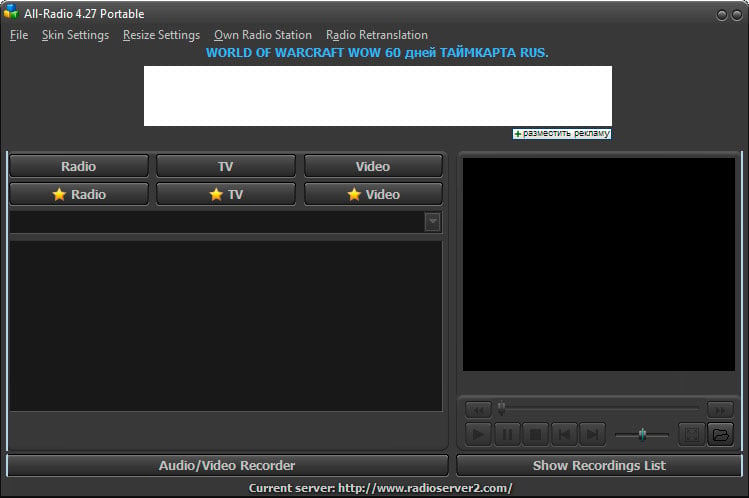
All-Radio 4.27 Portable Can't Be Removed? Then Your PC Is Severely Infected (bleepingcomputer.com) 247

CaptainDork shares a report from Bleeping Computer: Starting yesterday, there have been numerous reports of people's Windows computers being infected with something called "All-Radio 4.27 Portable." After researching this heavily today, it has been determined that seeing this program is a symptom of a much bigger problem on your computer. If your computer is suddenly displaying the above program, then your computer is infected with malware that installs rootkits, miners, information-stealing Trojans, and a program that is using your computer to send send out spam.

Unfortunately, while some security programs are able to remove parts of the infection, the rootkit component needs manual removal help. Due to this, if you are infected with this malware, I strongly suggest that you create a malware removal help topic in our Virus Removal forum in order to receive one-on-one help in cleaning your computer. Some of the VirusTotal scans associated with this infection have also indicated that an information stealing Trojan could have been installed by this malware bundle as well. Therefore, it is strongly suggested that you change your passwords using a clean machine if you had logged into any accounts while infected.
6/29/18: The story has been updated to specify that this malware campaign is targeting Windows computers.
Security

GitHub Gentoo Organization Hacked (gentoo.org) 41

Longtime Slashdot reader Chutzpah shares a report from Gentoo Linux, a Linux distribution built using the Portage package management system: June 28 at approximately 20:20 UTC unknown individuals have gained control of the Github Gentoo organization, and modified the content of repositories as well as pages there. We are still working to determine the exact extent and to regain control of the organization and its repositories. All Gentoo code hosted on GitHub should for the moment be considered compromised.

This does NOT affect any code hosted on the Gentoo infrastructure. Since the master Gentoo ebuild repository is hosted on our own infrastructure and since Github is only a mirror for it, you are fine as long as you are using rsync or webrsync from gentoo.org.
Update 6/29/18: Gentoo has regained control of the Gentoo GitHub Organization and is working on a procedure for resolution. You can view the update status here.
Privacy

Marketing Firm Exactis Leaked a Personal Info Database With 340 Million Records (wired.com) 77

You've probably never heard of the marketing and data aggregation firm Exactis. But it may well have heard of you. And now there's also a good chance that whatever information the company has about you, it recently leaked onto the public internet, available to any hacker who simply knew where to look. From a report: Earlier this month, security researcher Vinny Troia discovered that Exactis, a data broker based in Palm Coast, Florida, had exposed a database that contained close to 340 million individual records on a publicly accessible server. The haul comprises close to 2 terabytes of data that appears to include personal information on hundreds of millions of American adults, as well as millions of businesses. While the precise number of individuals included in the data isn't clear -- and the leak doesn't seem to contain credit card information or Social Security numbers -- it does go into minute detail for each individual listed, including phone numbers, home addresses, email addresses, and other highly personal characteristics for every name. The categories range from interests and habits to the number, age, and gender of the person's children.

"It seems like this is a database with pretty much every US citizen in it," says Troia, who is the founder of his own New York-based security company, Night Lion Security. Troia notes that almost every person he's searched for in the database, he's found. And when WIRED asked him to find records for a list of 10 specific people in the database, he very quickly found six of them. "I don't know where the data is coming from, but it's one of the most comprehensive collections I've ever seen," he says.

Android

Every Android Device Launched Since 2012 Impacted By RAMpage Vulnerability (bleepingcomputer.com) 83

Almost all Android devices released since 2012 are vulnerable to RAMpage bug, an international team of academics has revealed today. From a report: The vulnerability, tracked as CVE-2018-9442, is a variation of the Rowhammer attack. Rowhammer is a hardware bug in modern memory cards. A few years back researchers discovered that when someone would send repeated write/read requests to the same row of memory cells, the write/read operations would create an electrical field that would alter data stored on nearby memory. In the following years, researchers discovered that Rowhammer-like attacks affected personal computers, virtual machines, and Android devices. Through further researcher, they also found they could execute Rowhammer attacks via JavaScript code, GPU cards, and network packets.
Security

What's Up With ProtonMail Outages? (bleepingcomputer.com) 88

ProtonMail, a secure email service provider used by more than two million users and references of which has been made in shows like Mr. Robot, has been facing outages for the last two days as it fights numerous DDoS attacks. "The attacks went on for several hours, although the outages were far more brief, usually several minutes at a time with the longest outage on the order of 10 minutes," a ProtonMail spokesperson told BleepingComputer, adding that it has tracked the attack to a group that claims to have ties to Russia. But things are more complicated than that, and it appears ProtonMail users, who are already annoyed at the frequent outages over the last few days, are up for more such downtimes in the coming days. BleepingComputer: But in reality, the DDoS attacks have no ties to Russia, weren't even planned to in the first place, and the group behind the attacks denounced being Russian, to begin with. Responsible for the attacks is a hacker group named Apophis Squad. In a private conversation with Bleeping Computer today, one of the group's members detailed yesterday's chain of events. The Apophis member says they targeted ProtonMail at random while testing a beta version of a DDoS booter service the group is developing and preparing to launch.

The group didn't cite any reason outside "testing" for the initial and uncalled for attack on ProtonMail, which they later revealed to have been a 200 Gbps SSDP flood, according to one of their tweets. "After we sent the first attack, we downed it for 60 seconds," an Apophis Squad member told us. He said the group didn't intend to harass ProtonMail all day yesterday or today but decided to do so after ProtonMail's CTO, Bart Butler, responded to one of their tweets calling the group "clowns."

This was a questionable response on the part of the ProtonMail CTO, as it set the hackers against his company even more. "So we then downed them for a few hours," the Apophis Squad said. Subsequent attacks included a whopping TCP-SYN flood estimated at 500 Gbps, as claimed by the group.

Privacy

Home Security Camera Sends Video To Wrong User (bbc.com) 91

An anonymous reader quotes a report from the BBC: A leading security camera-maker has sent footage from inside a family's home to the wrong person's app. Swann Security has blamed a factory error for the data breach -- which was brought to its attention by the BBC -- and said it was a "one-off" incident. The BBC first learned of the problem on Saturday, when a member of its staff began receiving motion-triggered video clips from an unknown family's kitchen. Until that point, Louisa Lewis had only received footage from her own Swann security camera, which she had been using since December. The development coincided with Ms Lewis's camera running out of battery power and requiring a recharge. A Swann spokeswoman said that "human error" had caused two cameras to be manufactured that shared the same "bank-grade security key -- which secures all communications with its owner." "This occurred after the [family] connected the duplicate camera to their network and ignored the warning prompt that notified: 'Camera is already paired to an account' and left the camera running," she added.
United Kingdom

Ticketmaster UK Admits Personal Data Stolen In Hack Attack (bbc.com) 17

An anonymous reader quotes a report from BBC: Ticketmaster has admitted that it has suffered a security breach, which the BBC understands has affected up to 40,000 UK customers. Malicious software on third-party customer support product Inbenta Technologies caused the hack, the firm said on Twitter. "Some personal or payment information may have been accessed by an unknown third party," it added. All affected customers have been contacted.

In the email to those customers, Ticketmaster said it had set up a website to answer any questions and advised them to reset their passwords. It also offered them a free 12-month identity monitoring service. It said the breach was likely to have only affected UK customers who purchased or attempted to purchase tickets between February and 23 June 2018. But, as a precaution, it said it had also informed international customers who had purchased or attempted to purchase tickets between September 2017 and 23 June 2018.

Security

Betting Giant BetVictor Leaked a List of Its Own Internal Systems Passwords (zdnet.com) 24

A popular betting platform left a password list for its internal systems on its website for anyone to find. From a report: BetVictor, a Gibraltar-based betting site, has since removed the two-page document containing a list of links to back office systems, including usernames and passwords. Chris Hogben found the document through the customer support search box on the company's homepage. The customer support pop-up allowed users to search the site's knowledge base of questions and answers. "Logins/Links to Back Offices - Internal," read the document's title, which contained over two-dozen passwords to the company's trading platform, ticketing system, and Experian's identity verification service, Hogben told ZDNet.
The Internet

Google Home Speakers and Chromecast Are Down Worldwide, Company Confirms (washingtonpost.com) 65

"Sorry, something went wrong. Try again in a few seconds." That's the response that Google smart speaker users around the world heard Wednesday when they asked their devices to play music, get the weather or even respond to its "Hey, Google" prompt. From a report: Google confirmed there's a problem with both their smart speakers and the Chromecast, the plug-in video casting dongle for televisions. While the company did not say how many people are affected or what caused the issue, it did confirm it's working on a fix. "We're aware of an issue affecting some Google Home and Chromecast users. We're investigating the issue and working on a solution," Google said in a statement. Google Home and Chromecast owners started reporting issues to Google early Wednesday morning, according to online help forums for both devices. Devices affected by the problem have lost their normal functions.
Security

Scammers Abuse Multilingual Domain Names (bbc.com) 129

Cyber-criminals are abusing multilingual character sets to trick people into visiting phishing websites. BBC: The non-English characters allow scammers to create "lookalike" sites with domain names almost indistinguishable from legitimate ones. Farsight Security found scam sites posing as banks, loan advisers and children's brands Lego and Haribo. Smartphone users are at greater risk as small screens make lookalikes even harder to spot. The Farsight Security report looked at more than 100 million domain names that use non-English character sets -- introduced to make the net more familiar and usable for non-English speaking nations -- and found about 27% of them had been created by scammers. It also uncovered more than 8,000 separate characters that could be abused to confuse people.

Farsight founder Paul Vixie, who wrote much of the software underpinning the net's domain names told the BBC: "Any lower case letter can be represented by as many as 40 different variations."

Businesses

The Biggest Digital Heist in History Isn't Over Yet (bloomberg.com) 65

There are cyberheists, and then there's Carbanak, a cybercriminal gang that has stolen about $1.2 billion from more than 100 banks in 40 nations. The suspected 34-year-old ringleader is under arrest, but the whopping $1.2 billion amount remains missing. And to add insult to the injury, the malware attacks live on. Bloomberg Businessweek has an insightful story on this, which includes comments from none other than Europol itself, on the chase to catch Carabanak which has lasted for three years. Some excerpts from the story: Before WannaCry, before the Sony Pictures hack, and before the breaches that opened up Equifax and Yahoo!, there was a nasty bit of malware known as Carbanak. Unlike those spectacular attacks, this malware wasn't created by people interested in paralyzing institutions for ransom, publishing embarrassing emails, or taking personal data. The Carbanak guys just wanted loot, and lots of it.

Since late 2013, this band of cybercriminals has penetrated the digital inner sanctums of more than 100 banks in 40 nations, including Germany, Russia, Ukraine, and the U.S., and stolen about $1.2 billion, according to Europol, the European Union's law enforcement agency. The string of thefts, collectively dubbed Carbanak -- a mashup of a hacking program and the word "bank" -- is believed to be the biggest digital bank heist ever. In a series of exclusive interviews with Bloomberg Businessweek, law enforcement officials and computer-crime experts provided revelations about their three-year pursuit of the gang and the mechanics of a caper that's become the stuff of legend in the digital underworld.

Besides forcing ATMs to cough up money, the thieves inflated account balances and shuttled millions of dollars around the globe. Deploying the same espionage methods used by intelligence agencies, they appropriated the identities of network administrators and executives and plumbed files for sensitive information about security and account management practices. The gang operated through remotely accessed computers and hid their tracks in a sea of internet addresses.

Security

Hundreds of Hotels Affected by Data Breach at Hotel Booking Software Provider (bleepingcomputer.com) 30

Catalin Cimpanu, reporting for BleepingComputer: The personal details and payment card data of guests from hundreds of hotels, if not more, have been stolen this month by an unknown attacker, Bleeping Computer has learned. The data was taken from FastBooking, a Paris-based company that sells hotel booking software to more than 4,000 hotels in 100 countries -- as it claims on its website.

In emails the company sent out to affected hotels today, FastBooking revealed the breach took place on June 14, when an attacker used a vulnerability in an application hosted on its server to install a malicious tool (malware). This tool allowed the intruder remote access to the server, which he used to exfiltrate data. The incident came to light when FastBooking employees discovered this malicious tool on its server.

Businesses

57% of Tech Workers Are Suffering From Job Burnout, Survey Finds (bleepingcomputer.com) 317

An anonymous reader writes: A survey conducted among the tech workers, including many employees of Silicon Valley's elite tech companies, has revealed that over 57% of respondents are suffering from job burnout. The survey was carried out by the makers of an app that allows employees to review workplaces and have anonymous conversations at work, behind their employers' backs. Over 11K employees answered one question -- if they suffer from job burnout, and 57.16% said "Yes."

The company with the highest employee burnout rate was Credit Karma, with a whopping 70.73%, followed by Twitch (68.75%), Nvidia (65.38%), Expedia (65.00%), and Oath (63.03% -- Oath being the former Yahoo company Verizon bought in July 2017). On the other end of the spectrum, Netflix ranked with the lowest burnout rate of only 38.89%, followed by PayPal (41.82%), Twitter (43.90%), Facebook (48.97%), and Uber (49.52%).

Bitcoin

Last Year's ICOs Had Five Security Vulnerabilities On Average, Say Researchers (bleepingcomputer.com) 44

An anonymous reader quotes a report from Bleeping Computer: Security researchers have found, on average, five security flaws in each cryptocurrency ICO held last year. Only one ICO held in 2017 did not contain any critical flaws. According to Positive.com, a security firm specialized in ICO security audits, most of the vulnerabilities they found, they discovered in the smart contracts at the base of the ICO itself.

"71% of tested projects contained vulnerabilities in smart contracts, the heart and soul of an ICO," the company said. "Once an ICO starts, the contract cannot be changed and is open to everyone, meaning anyone can view it and look for flaws. Typically, these would consist of non compliance with the ERC20 standard (the token interface for digital wallets and cryptocurrency exchanges), incorrect random number generation and incorrect scoping amongst others," Positive.com experts say. "Generally, these vulnerabilities occur due to lack of programmer expertise and insufficient source code testing."
According to the researchers, all the mobile apps ICO organizers have launched in 2017 contained security flaws. "The most common flaws in mobile apps are the use of insecure data transfer methods, storage of user data in phone backups, and disclosure of session IDs that an attacker could capture and use against the user," reports Bleeping Computer. Security bugs were also found in the web apps.
Privacy

Voices of Millions of UK Taxpayers Stored By HMRC (bbc.co.uk) 90

AmiMoJo shares a report from BBC: The voices of millions of taxpayers have been analyzed and stored by HM Revenue and Customs (HMRC) without consent, privacy campaigners say. Big Brother Watch says HMRC's Voice ID system has collected 5.1 million audio signatures and accuses the department of creating "biometric ID cards by the back door." The Voice ID scheme, which was launched last year, asks callers to repeat the phrase "my voice is my password" to register. Once this task is complete, they can use the phrase to confirm their identity when managing their taxes.

Slashdot Top Deals