Bug

A Glitch Stole Christmas: S.C. Lottery Says Error Caused Winning Tickets (npr.org) 113

An anonymous reader shares a report: The South Carolina lottery game is called Holiday Cash Add-A-Play, and the rules are pretty simple: Get three Christmas tree symbols in any vertical, horizontal or diagonal line, and you win a prize. Monday was Christmas, and some folks in the Palmetto State were feeling jolly. "I don't play the lottery that much," Nicole Coggins of Liberty, S.C., told local NBC affiliate WYFF. "Every once in a while, I'll buy a Powerball ticket, but something told me to buy a lottery ticket." She paid an extra dollar to add a play. The ticket was a winner, and she was excited.

The station says that as word got out about the sudden proliferation of winning tickets, a frenzy ensued. One store manager told WYFF that "it was crazy" as people hurried to buy the tickets. But the Christmas miracle was too good to be true. The South Carolina Education Lottery says a programming error in its computer system vendor is to blame for so many winning tickets. "From 5:51 p.m. to 7:53 p.m., the same play symbol was repeated in all nine available play areas on tickets which would result in a top prize of $500," the lottery said in a statement Wednesday. "No more than five identical play symbols should appear for a single play. As soon as the issue was identified, the Add-A-Play game was suspended immediately to conduct a thorough investigation."

Chrome

Chrome Extension with 100,000 Users Caught Pushing Cryptocurrency Miner (bleepingcomputer.com) 47

Catalin Cimpanu, reporting for BleepingComputer: A Chrome extension with over 105,000 users has been deploying an in-browser cryptocurrency miner to unsuspecting users for the past few weeks. The extension does not ask for user permission before hijacking their CPUs to mine Monero all the time the Chrome browser is open. Named "Archive Poster," the extension is advertised as a mod for Tumblr that allows users an easier way to "reblog, queue, draft, and like posts right from another blog's archive." According to users reviews, around the start of December the extension has incorporated the infamous Coinhive in-browser miner in its source code.
Security

Web Trackers Exploit Flaw In Browser Login Managers To Steal Usernames (bleepingcomputer.com) 76

An anonymous reader writes: Princeton privacy experts are warning that advertising and analytics firms can secretly extract site usernames from browsers using hidden login fields and tie non-authenticated users visiting a site with their profiles or emails on that domain. This type of abusive behavior is possible because of a design flaw in the login managers included with all browsers. Experts say that web trackers can embed hidden login forms on sites where the tracking scripts are loaded. Because of the way the login managers work, the browser will fill these fields with the user's login information, such as username and passwords.

The trick is an old one, known for more than a decade but until now it's only been used by hackers trying to collect login information during XSS (cross-site scripting) attacks. Princeton researchers say they recently found two web tracking services that utilize hidden login forms to collect login information. The two services are Adthink (audienceinsights.net) and OnAudience (behavioralengine.com), and Princeton researchers said they identified scripts from these two that collected login info on 1,110 sites found on the Alexa Top 1 Million sites list. A demo page has been created to show how the tracking works.

Software

FBI Software For Analyzing Fingerprints Contains Russian-Made Code, Whistleblowers Say (buzzfeed.com) 174

schwit1 shares an exclusive report via BuzzFeed: The fingerprint-analysis software used by the FBI and more than 18,000 other U.S. law enforcement agencies contains code created by a Russian firm with close ties to the Kremlin, according to documents and two whistleblowers. The allegations raise concerns that Russian hackers could gain backdoor access to sensitive biometric information on millions of Americans, or even compromise wider national security and law enforcement computer systems. The Russian code was inserted into the fingerprint-analysis software by a French company, said the two whistleblowers, who are former employees of that company. The firm -- then a subsidiary of the massive Paris-based conglomerate Safran -- deliberately concealed from the FBI the fact that it had purchased the Russian code in a secret deal, they said. The Russian company whose code ended up in the FBI's fingerprint-analysis software has Kremlin connections that should raise similar national security concerns, said the whistleblowers, both French nationals who worked in Russia. The Russian company, Papillon AO, boasts in its own publications about its close cooperation with various Russian ministries as well as the Federal Security Service -- the intelligence agency known as the FSB that is a successor of the Soviet-era KGB and has been implicated in other hacks of U.S. targets.

Cybersecurity experts said the danger of using the Russian-made code couldn't be assessed without examining the code itself. But "the fact that there were connections to the FSB would make me nervous to use this software," said Tim Evans, who worked as director of operational policy for the National Security Agency's elite cyberintelligence unit known as Tailored Access Operations and now helps run the cybersecurity firm Adlumin. The FBI's overhaul of its fingerprint-recognition technology, unveiled in 2011, was part of a larger initiative known as Next Generation Identification to expand the bureau's use of biometrics, including face- and iris-recognition technology. The TSA also relies on the FBI fingerprint database.

Security

Some Sonos and Bose Speakers Are Being Hijacked To Play Ghostly Sounds (theverge.com) 41

An anonymous reader quotes a report from The Verge: Researchers at Trend Micro have found that certain models of Sonos and Bose speakers have vulnerabilities that leave them open to hijacking, as reported by Wired. The accessible speakers are being exploited by hackers that are using them to play spooky sounds, Alexa commands, and Rick Astley tracks. Only a small percentage of speakers by the two companies are actually affected, including some of the Sonos Play:1, the Sonos One, and the Bose SoundTouch. All it takes is for the speaker to be connected to a misconfigured network and a simple internet scan. Once the speaker is discovered via the scan, the API it uses to talk to apps can be utilized to tell the speakers to play any audio file hosted at a specific URL. Of all the models, between 2,500 to 5,000 Sonos devices and 400 to 500 Bose devices were found by Trend Micro to be open to audio hacking.
Businesses

56,000 Layoffs and Counting: India's IT Bloodbath This Year May Just Be the Start (qz.com) 211

An anonymous reader quotes a report from Quartz: For Indian techies, 2017 was the stuff of nightmares. One of the top employment generators until a few years ago, India's $160 billion IT industry laid off more than 56,000 employees this year. Some analysts believe this spree was worse than the one during the 2008 financial crisis. Meanwhile, hiring plummeted, with entry-level openings having more than halved in 2017, according to experts. Tata Consultancy Services (TCS) and Infosys, two of India's largest IT companies and once leaders in job creation, reduced their headcounts for the first time ever. Even mid-sized players like Tech Mahindra retrenched several employees.

Compared to the normal rate of forced attrition (i.e. asking non-performers to leave) of around 1% in earlier years, 2017 saw Indian IT companies letting go of between 2% and 6% of their employees, said Alka Dhingra, general manager of IT staffing at TeamLease Services. Infosys cut 9,000 jobs in January. "Instead of 10 people, what if we have three people to work on (a project). If we don't have the software, then some others will take the advantage (away from us)," Vishal Sikka, the former CEO of the Bengaluru-based company, said in February. Meanwhile, around 6,000 Indian employees at Cognizant reportedly lost their jobs to automation.

Technology

That '70s Show: the Conference That Predicted the Future of Work (wired.com) 40

theodp writes: Over at Wired, Leslie Berlin writes about Futures Day at the 1977 Xerox World Conference, an invitation-only demonstration of the Alto personal computer system developed at Xerox PARC. It's an excerpt from Troublemakers: How a Generation of Silicon Valley Upstarts Invented the Future. Both Berlin's book and Brian Dear's recent The Friendly Orange Glow: The Untold Story of the PLATO System and the Dawn of Cyberculture are shedding light on groundbreaking systems of the '70s that were ultimately done in by the less-featured but low-cost Apple II (yes, $2,638 for a system with 48 kB of RAM was 'low cost'!) and other personal computers. Interestingly, Dear notes that the Xerox Parc and PLATO teams sent people out to see and learn and exchange ideas with each other over the years. Their interactions included 'tremendous battles' over the advantages and disadvantages of mouse interfaces [Xerox] vs. touch screens [PLATO], as well as plasma displays [PLATO] vs. other, cheaper display solutions [Xerox]. As is the case with many debates, both teams proved to be "right." Apple wouldn't introduce the masses to a mouse interface until 1984 [Macintosh] and a touch screen interface until 2007 [iPhone].
Security

Acoustic Attacks on HDDs Can Sabotage PCs, CCTV Systems, ATMs, More (bleepingcomputer.com) 72

Catalin Cimpanu, writing for BleepingComputer: Attackers can use sound waves to interfere with a hard drive's normal mode of operation, creating a temporary or permanent denial of state (DoS) that could be used to prevent CCTV systems from recording video footage or freeze computers dealing with critical operations. The basic principle behind this attack is that sound waves introduce mechanical vibrations into an HDD's data-storage platters. If the sound is played at a specific frequency, it creates a resonance effect that amplifies the vibration effect. Because hard drives store vasts amounts of information inside small areas of each platter, they are programmed to stop all read/write operations during the time a platter vibrates so to avoid scratching storage disks and permanently damaging an HDD. Last week, scientists from the Princeton and Purdue universities published new research into the topic, expanding on the previous findings with the results of additional practical tests. The research team used a specially crafted test rig to blast audio waves at a hard drive from different angles, recording results to determine the sound frequency, attack time, distance from the hard drive, and sound wave angle at which the HDD stopped working.
Mozilla

Mozilla Patches Critical Bug in Thunderbird (threatpost.com) 76

Mozilla has issued a critical security update to its popular open-source Thunderbird email client. From a report The patch was part of a December release of five fixes that included two bugs rated high and one rated moderate and another low. Mozilla said Thunderbird, which is also serves as a news, RSS and chat client, the latest Thunderbird 52.5.2 version released last week fixes the vulnerabilities. The most serious of the fixes is a critical buffer overflow bug (CVE-2017-7845) impacting Thunderbird running on Windows operating system. The bug is present when "drawing and validating elements with angle library using Direct 3D 9," according to the Mozilla Foundation Security Advisory. US-Cert said it encourages users and administrators to review the patch and apply the necessary update.
Bitcoin

Beware: 'Digmine' Cryptocurrency Bot Is Spreading Via Facebook Messenger (techspot.com) 96

Cybersecurity firm Trend Micro has discovered a cryptocurrency bot that is being spread through Facebook Messenger. The bot, dubbed Digmine, was discovered in South Korea and has since been found in Vietnam, Azerbaijan, Ukraine, Vietnam, Philippines, Thailand, and Venezuela. TechSpot explains: Victims receive a file named "video_xxxx.zip" from one of their Facebook Messenger contacts. Opening it will load Chrome along with a malicious browser extension. Extensions can only be downloaded from the Chrome Web Store, but this is bypassed using the command line. Once the malware infects a system, a modified version of XMRig -- a Monero mining tool -- is installed. This mines the cryptocurrency in the background using a victim's CPU, sending all profits back to the hackers. Additionally, the Chrome extension is also used to spread Digmine. If someone has their Facebook account set to log in automatically, the fake video file link will be sent to all their friends via Messenger. The malware could also be used to take over a Facebook account entirely. The good news is that Digmine only works through the Chrome desktop version of Messenger. Right now, opening the malicious file via the Facebook/Messenger app or mobile webpage won't have the same effect. After Trend Micro revealed its findings, Facebook said it had taken down any links connected to Digmine.
United Kingdom

UK Companies Facing Cyber Security Staff Shortage (theguardian.com) 138

Bruce66423 writes: According to a recent survey of recruitment agencies, 81% expect a rise in demand for digital security staff, but only 16% saw that the demand would be met."

Resorting to 'neuro-diversity' [...] "We were originally plucking people from IT and bolting skills on but we changed our entire recruitment policy including targeting different kinds of people," said Rob Partridgeat BT Security. "One area we've looked at is neuro diversity. We know, for example, that some people with Asperger's are highly suited to cyber but don't always have good communication skills so we changed our approach to the way we source and interview candidates.

Security

Man Threatened Company With Cyber Attack To Fire Employee and Hire Him Instead (bleepingcomputer.com) 151

An anonymous reader writes: A North Carolina judge sentenced a Washington man this week to 37 months in prison for threatening a company with attacks unless they fire one of their employees and hire him instead. According to court documents obtained by Bleeping Computer, on April 18, 2016, Todd Michael Gori sent an email to TSI Healthcare, a healthcare software vendor based in Chapel Hill, North Carolina. Gori, a 28-year-old resident of Wenatchee, Washington, threatened the company with cyber attacks by him and unnamed friends if the company did not fire one of its employees and hire him instead.

"I am giving you, TSI healthcare two choices," Gori wrote in the email. "You either lay-off [identity redacted] and replace her with me, an operator 100x better that she is oppressing. Or I will take out your entire company along with my comrades via a cyber attack. Again you have two choices. Get ride of her and hire me. Or slowly be chipped away at until you are gone. She is a horrible operator that can only manage 2 screens with an over inflated travel budget. I fly at least 10x as many places as this loon on 1/5th of the budget," the email reads. "I have petitioned for a job with you guys with her as a reference as I am a felon with computer skills and need assistance getting work as technically I have 'no work history'. She declines everytime and burries me even further."

Government

65% of Washington DC's Outdoor Surveillance Cameras Infiltrated by Romanian Hackers (thehill.com) 85

An anonymous reader quotes The Hill: Two Romanian hackers stand accused of hacking more than 100 outdoor police security cameras in the D.C. area during the days leading up to President Trump's inauguration, according to a court document obtained by CNN. According to an affidavit from Secret Service agent James Graham, Mihai Alexandru Isvanca and Eveline Cismaru are accused of hacking and disabling 123 out of 187 of the city's cameras between Jan. 12 and Jan. 15... Isvanca and Cismaru are also accused in the affidavit of spreading ransomware.
In a possibly-related story, the Washington Post reports: Five Romanian hackers were arrested over the past week as part of an international investigation into computer ransomware, officials in the United States and Europe said Wednesday. In six houses across Romania, law enforcement operatives from Romania, Britain, the United States and the Netherlands seized hard drives, laptops, external storage devices and documents related to malicious software called CTB-Locker or Critroini.
Businesses

Amazon Acquires Connected Camera and Doorbell Startup 'Blink' (slashgear.com) 18

In an effort to push further into smart home and connected security products, Amazon has acquired Blink -- a wireless security camera company that launched back in 2014 and then subsequently closed a million-dollar Kickstarter campaign. SlashGear reports: The deal was announced today, and for the moment will see Blink continue to operate as-is, with no changes to the company's line-up. That includes the recently announced Blink Video Doorbell. Blink first broke cover back in 2014, then the following year announced a crowdfunding campaign aiming to raise $200k for its entirely wire-free security camera. Unlike rival systems that require a wired power connection, or the few battery-powered cameras already on the market which generally had relatively short battery life, Blink's promised more than a year of home monitoring from a single charge. The campaign was a success, with Blink raising five times the amount it initially targeted.

It's not hard to see, therefore, why Amazon might have been interested. Financial terms of the deal have not been disclosed at this stage, but the retailer is making a serious push into smart home and connected security products. That started with the Amazon Cloud Cam, a streaming video camera that requires mains power, and which is an instrumental part of Amazon Key, its home delivery service.

Security

'Username or Password is Incorrect' Security Defense is a Weak Practice (hackernoon.com) 249

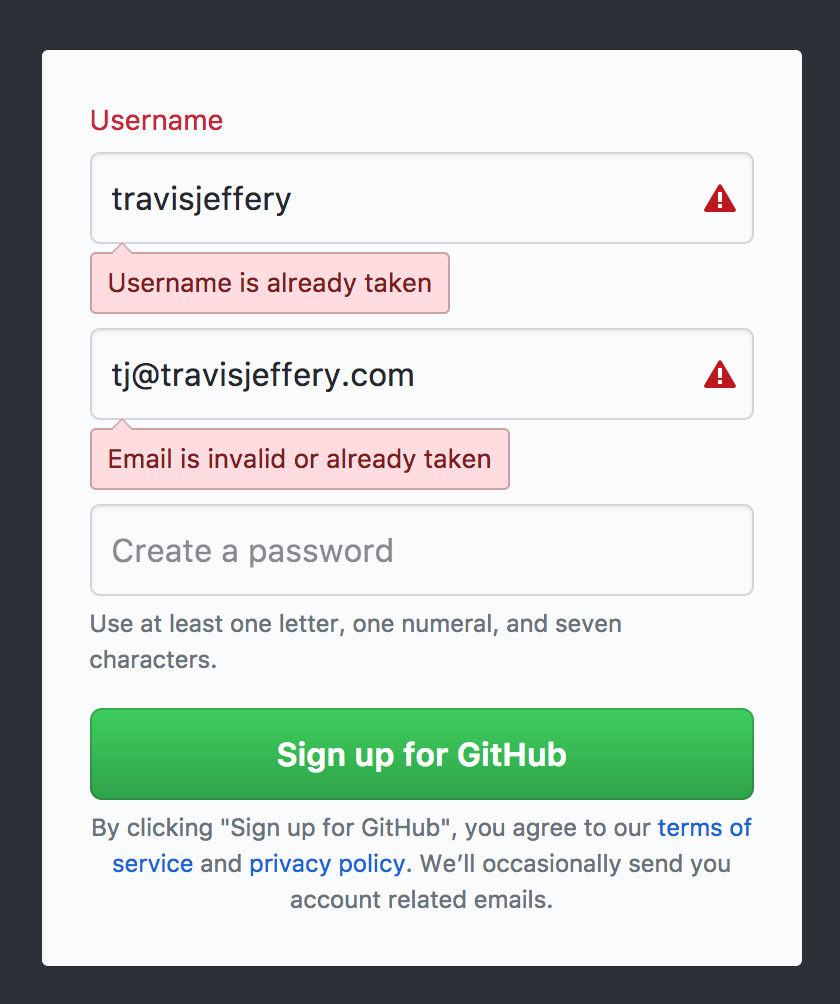
Travis Jeffery, writing for HackerNoon: There's a security best practice where sign ins aren't supposed to say "password is incorrect." Instead they're supposed to say the "username or password is incorrect." This "best practice" is bullshit. Stripe's and GitHub's sign ins for example follow this practice. The idea is if an attacker knows a username, he or she could concentrate on that account using SQL injection, brute forcing the password, phishing, and so on. Here's the problem. All a hacker has to do is sign up to know whether the username is valid or not. Why bother then with obfuscating the sign in? Only the dumbest, laziest hacker is stopped by the "username or password is incorrect" sign in. You gain no security, yet your customers lose clarity. Stripe has their form submission behind reCAPTCHA to prevent naive scripts attacking their sign up. However this has been broken multiple times and likely won't ever be perfect. Even if reCAPTCHA was perfect, a hacker could manually validate their usernames of interest by trying to sign up, then automate an attack on the sign in page.
Android

Snowden's New App Haven Uses Your Smartphone To Physically Guard Your Laptop (theintercept.com) 134

An anonymous reader shares a report: The NSA whistleblower and a team of collaborators have been working on a new open source Android app called Haven that you install on a spare smartphone, turning the device into a sort of sentry to watch over your laptop. Haven uses the smartphone's many sensors -- microphone, motion detector, light detector, and cameras -- to monitor the room for changes, and it logs everything it notices. The first public beta version of Haven has officially been released; it's available in the Play Store and on F-Droid, an open source app store for Android.
Piracy

AnyDVD Supports UHD Blu-Ray Ripping, While Devices Patch Security Holes (torrentfreak.com) 68

The controversial ripping tool AnyDVD has released a new beta version that allows users to decrypt and copy UHD Blu-Ray discs. The software makes use of the leaked keys that came out recently and appears to work well. Meanwhile, disc drive manufacturers are patching security holes. TorrentFreak reports: This year there have been some major developments on this front. First, full copies of UHD discs started to leak online, later followed by dozens of AACS 2.0 keys. Technically speaking AACS 2.0 is not confirmed to be defeated yet, but many discs can now be ripped. This week a popular name jumped onto the UHD Blu-Ray bandwagon. In its latest beta release, AnyDVD now supports the format, relying on the leaked keys. "New (UHD Blu-ray): Fetch AACS keys from external file for use with 'UHD-friendly' drives," the release notes read. The involvement of AnyDVD is significant because it previously came under legal pressure from decryption licensing outfit AACS LA. This caused former parent company Slysoft to shut down last year, but the software later reappeared under new management. Based on reports from several AnyDVD users, the UHD ripping works well for most people. Some even claim that it's faster than the free alternative, MakeMKV.
Security

Security Firm Keeper Sues News Reporter Over Vulnerability Story (zdnet.com) 73

Zack Whittaker, writing for ZDNet: Keeper, a password manager software maker, has filed a lawsuit against a news reporter and its publication after a story was posted reporting a vulnerability disclosure. Dan Goodin, security editor at Ars Technica, was named defendant in a suit filed Tuesday by Chicago-based Keeper Security, which accused Goodin of "false and misleading statements" about the company's password manager. Goodin's story, posted December 15, cited Google security researcher Tavis Ormandy, who said in a vulnerability disclosure report he posted a day earlier that a security flaw in Keeper allowed "any website to steal any password" through the password manager's browser extension.
Microsoft

Windows 10 Facial Recognition Feature Can Be Bypassed with a Photo (bleepingcomputer.com) 95

Windows Hello, the face scanning security feature in Windows 10, has been defeated with the use of a printed out picture. From a report: In a report published yesterday, German pen-testing company SySS GmbH says it discovered that Windows Hello is vulnerable to the simplest and most common attack against facial recognition biometrics software -- the doomsday scenario of using a printed photo of the device's owner. Researchers say that by using a laser color printout of a low-resolution (340x340 pixels) photo of the device owner's face, modified to the near IR spectrum, they were able to unlock several Windows devices where Windows Hello had been previously activated. The attack worked even if the "enhanced anti-spoofing" feature had been enabled in the Windows Hello settings panel, albeit for these attacks SySS researchers said they needed a photo of a higher resolution of 480x480 pixels (which in reality is still a low-resolution photo). [...] Microsoft released updates earlier this month to patch the vulnerability.
Bitcoin

Youbit Shuts Down Cryptocurrency Exchange After Second Hack, Files For Bankruptcy (bbc.com) 68

phalse phace writes: After experiencing another hack, South Korean crypto-currency exchange Youbit has closed their doors and is filing for bankruptcy. BBC reports: "Youbit, which lets people buy and sell bitcoins and other virtual currencies, has filed for bankruptcy after losing 17% of its assets in the cyber-attack. It did not disclose how much the assets were worth at the time of the attack. In April, Youbit, formerly called Yapizon, lost 4,000 bitcoins now worth $73 million to cyberthieves. South Korea's Internet and Security Agency (Kisa) which investigates net crime, said it had started an enquiry into how the thieves gained access to the exchange's core systems. Kisa blamed the earlier attack on Youbit on cyber-spies working for North Korea. Separate, more recent, attacks on the Bithumb and Coinis exchanges, have also been blamed on the regime. No information has been released about who might have been behind the latest Youbit attack. In a statement, Youbit said that customers would get back about 75% of the value of the crypto-currency they have lodged with the exchange."

Slashdot Top Deals