Businesses

Amazon Will Allow Many Employees To Work Remotely Indefinitely (seattletimes.com) 33

Amazon will allow many tech and corporate workers to continue working remotely indefinitely, as long as they are able to commute to the office when necessary, according to a blog posted Monday. From a report: The new policy is a change from Amazon's previous expectation that most employees would need to be in the office at least three days a week once offices reopen in January. Monday's message, signed by Amazon CEO Andy Jassy, explains that Amazon directors -- at Amazon, a title signifying an executive who oversees a handful of teams -- will have the discretion to allow teams under their purview to stay remote. "We expect that there will be teams that continue working mostly remotely, others that will work some combination of remotely and in the office, and still others that will decide customers are best served having the team work mostly in the office," Jassy wrote. "We're intentionally not prescribing how many days or which days -- this is for Directors to determine with their senior leaders and teams."

In the blog post, Jassy thanked Amazon employees who have been unable to work remotely during the pandemic "for their passion. It is highly appreciated." Those workers include the vast majority of Amazon's more than 1 million employees worldwide, who work in the company's fulfillment and transportation division, as well as its AWS data center and physical retail employees. Amazon's update to its return-to-work policy follows similar moves from other tech giants. Microsoft announced last month that it had postponed reopening its offices indefinitely; Google has said it anticipates roughly 20% of its workforce will continue to telecommute full-time.

Science

Can Nuclear Fusion Put the Brakes on Climate Change? (newyorker.com) 293

Amid an escalating crisis, the power source offers a dream -- or a pipe dream -- of limitless clean energy. From a report: Let's say that you've devoted your entire adult life to developing a carbon-free way to power a household for a year on the fuel of a single glass of water, and that you've had moments, even years, when you were pretty sure you would succeed. Let's say also that you're not crazy. This is a reasonable description of many of the physicists working in the field of nuclear fusion. In order to reach this goal, they had to find a way to heat matter to temperatures hotter than the center of the sun, so hot that atoms essentially melt into a cloud of charged particles known as plasma; they did that. They had to conceive of and build containers that could hold those plasmas; they did that, too, by making "bottles" out of strong magnetic fields. When those magnetic bottles leaked -- because, as one scientist explained, trying to contain plasma in a magnetic bottle is like trying to wrap a jelly in twine -- they had to devise further ingenious solutions, and, again and again, they did. Over decades, in the pursuit of nuclear fusion, scientists and engineers built giant metal doughnuts and Gehryesque twisted coils, they "pinched" plasmas with lasers, and they constructed fusion devices in garages. For thirty-six years, they have been planning and building an experimental fusion device in Provence. And yet commercially viable nuclear-fusion energy has always remained just a bit farther on.

As the White Queen, in "Through the Looking Glass," said to Alice, it is never jam today, it is always jam tomorrow. The accelerating climate crisis makes fusion's elusiveness more than cutely maddening. Solar energy gets more efficient and affordable each year, but it's not continuously available, and it still relies on gas power plants for distribution. The same is true for wind power. Conventional nuclear power has extremely well-known disadvantages. Carbon capture, which is like a toothbrush for the sky, is compelling, but after you capture a teraton or two of carbon there's nowhere to put it. All these tools figure extensively in decarbonization plans laid out by groups like the Intergovernmental Panel on Climate Change, but, according to those plans, even when combined with one another the tools are insufficient. Fusion remains the great clean-energy dream -- or, depending on whom you ask, pipe dream. Fusion, theoretically, has no scarcity issues; our planet has enough of fusion's primary fuels, heavy hydrogen and lithium, which are found in seawater, to last thirty million years.

Fusion requires no major advances in batteries, it would be available on demand, it wouldn't cause the next Fukushima, and it wouldn't be too pricey -- if only we could figure out all the "details." (A joke I heard is that fusion operates according to the law of the "conservation of difficulty": when one problem is solved, a new one of equal difficulty emerges to take its place.) The details are tremendously complex, and the people who work to figure them out have for years been dealing with their own scarcities -- scarcities of funding and scarcities of faith. Fusion, as of now, has no place in the Green New Deal. In 1976, the U.S. Energy Research and Development Administration published a study predicting how quickly nuclear fusion could become a reality, depending on how much money was invested in the field. For around nine billion a year in today's dollars -- described as the "Maximum Effective Effort" -- it projected reaching fusion energy by 1990. The scale descended to about a billion dollars a year, which the study projected would lead to "Fusion Never." "And that's about what's been spent," the British physicist Steven Cowley told me. "Pretty close to the maximum amount you could spend in order to never get there."

Businesses

'We're in a Hurry.' Qualcomm New CEO Scrambles To Cope With a Global Chip Crisis. (wsj.com) 28

Cristiano Amon is the new boss of Qualcomm, a U.S. tech giant that designs semiconductors. His first task: Convince companies to make more chips for him -- and fast. From a report: Months before Cristiano Amon started as CEO of Qualcomm, he already was at work on his first crisis. To solve it, he sat in a mostly empty meeting room in Taipei and pleaded with executives from one of the world's biggest semiconductor makers for more chips. He needed the help so that Qualcomm, a designer of circuits that go into hundreds of millions of electronic devices every year, could chase new markets and meet demand from big customers such as Apple, Samsung Electronics and China's top handset-makers. In fact, he needed the assistance so much that he got permission from the Taiwanese government to arrive in March and then waited through a three-day quarantine. Once he and his team got to the meeting place in a Taipei hotel, they negotiated with counterparts across a large room outfitted with microphones and speakers to communicate.

"I'm a very big believer that sometimes you have to meet folks in person," said Mr. Amon, who was named CEO in January and officially took over in June. Many new CEOs across the business world had to adjust to their roles amid unprecedented pandemic-era restrictions, getting to know key employees without ever meeting them in person and managing offices and business relationships from far away. Few can say they had a more tumultuous transition than Mr. Amon, a gregarious Brazilian who revels in person-to-person contact. He is juggling a cluster of major challenges -- a global chip shortage, a sudden shift in a key market, and an unexpected acquisition opportunity -- while trying to put his own stamp on a company after working there for more than two decades. He wants to focus on an expansion beyond Qualcomm's core mobile-phone chip business, a shift that began before he took over. "I've been doing many things in parallel and I want to succeed in them all," he said in an interview. "I can't afford not to do them because we're in a hurry."

Facebook

Facebook To Act on Illegal Sale of Amazon Rainforest (bbc.com) 22

Facebook says it will begin clamping down on the illegal sale of protected areas of the Amazon rainforest on its site. From a report: The social media giant changed its policy following a BBC investigation into the practice. The new measures will apply only to conservation areas and not to publicly owned forest. And the move will be limited to the Amazon, not other rainforests and wildlife habitats across the world. According to a recent study from the think tank Ipam (Instituto de Pesquisa Ambental da Amazonia), a third of all deforestation happens in publicly-owned forests in the Amazon. Facebook said it would not reveal how it planned to find the illegal ads but said it would "seek to identify and block new listings" in protected areas of the Amazon rainforest. In February, the BBC Our World documentary Selling the Amazon revealed that plots of rainforest as large as 1,000 football pitches were being listed on Facebook's classified ads service.
Communications

Telkom Says Netflix No Longer Available on South Africa Provider (bloomberg.com) 10

Telkom SA said Netflix will no longer be available on the South African phone and internet company's set-top box from October. From a report: A deal between the parties has come to an end and will not be renewed, Content Executive Wanda Mkhize said in a statement, without giving a specific reason. Other content partnerships will be announced in due course, she said. The move comes after MultiChoice, Africa's largest pay-TV provider, signed deals with Netflix and Amazon.com to offer their streaming services through its new decoder. The continent is a small market for paid streaming video, with just a few million subscribers out of a population of more than 1 billion, and the U.S. giants have targeted it for future growth.
United Kingdom

Ex-minister Predicts 'Huge Battleground' Over UK's Plan To Set Internet Content Rules (techcrunch.com) 46

The former UK minster of state for what is now the digital and culture department, DCMS, has warned of the looming battle in parliament over the exact shape of incoming online safety legislation. From a report: In an interview with TechCrunch, Ed Vaizey -- a former Conservative Party MP, now Lord Vaizey of Didcot, who was head of the culture, comms and creative industries department, as it was then, between 2010 and 2016 -- predicted a huge tug-of-war to influence the scope of the Online Safety Bill, warning that parliamentarians everywhere will try to hang their own "hobby horse" on it. The risk of over regulation or creating a disproportionate burden for startups vs tech giants is also real, Vaizey suggested, setting out several areas that he said would require a cautious approach.

"In theory it's just going to be the big platforms that will be regulated," he said of the scope of the Internet Safety Bill, which was published in draft form back in May -- and which critics are warning will be catastrophic for free speech. "Some platforms that should be regulated could potentially not be be regulated. But you're right that people are concerned that, in effect, there's a paradox -- that it could help the Facebooks of this world because the regulatory hurdles that get going might be too big. And if anyone is capable of being regulated it's Facebook, as opposed to a startup. So I think that's something we have to be very careful of. "Secondly, although I support the principle of legal but harmful content being regulated I have no doubt at all that that is going to be the big battle in parliament. The balance between legal but harmful free speech is going to be a huge battleground. And it will be interesting to see in what form it survives. And thirdly -- I think, paradoxically -- everyone is going to try and hang their own particular hobby horse on this piece of legislation."

Facebook

Facebook's Success Was Built on Algorithms. Can They Also Fix It? (cnn.com) 70

Experts tell CNN that Facebook's algorithms could be improved. "It will, however, require something Facebook has so far appeared reluctant to offer (despite executive talking points): more transparency and control for users." Margaret Mitchell, who leads artificial intelligence ethics for AI model builder Hugging Face and formerly co-led Google's ethical AI team, thinks this could be done by allowing you to view details about why you're seeing what you're seeing on a social network, such as in response to the posts, ads, and other things you look at and interact with. "You can even imagine having some say in it. You might be able to select preferences for the kinds of things you want to be optimized for you," she said, such as how often you want to see content from your immediate family, high school friends, or baby pictures. All of those things may change over time. Why not let users control them? Transparency is key, she said, because it incentivizes good behavior from the social networks.

Another way social networks could be pushed in the direction of increased transparency is by increasing independent auditing of their algorithmic practices, according to Sasha Costanza-Chock, director of research and design at the Algorithmic Justice League. They envision this as including fully independent researchers, investigative journalists, or people inside regulatory bodies — not social media companies themselves, or companies they hire — who have the knowledge, skills, and legal authority to demand access to algorithmic systems in order to ensure laws aren't violated and best practices are followed.

James Mickens, a computer science professor at Harvard and co-director of the Berkman Klein Center's Institute for Rebooting Social Media, suggests looking to the ways elections can be audited without revealing private information about voters (such as who each person voted for) for insights about how algorithms may be audited and reformed. He thinks that could give some insights for building an audit system that would allow people outside of Facebook to provide oversight while protecting sensitive data. A big hurdle, experts say, to making meaningful improvements is social networks' current focus on the importance of engagement, or the amount of time users spend scrolling, clicking, and otherwise interacting with social media posts and ads... Changing this is tricky, experts said, though several agreed that it may involve considering the feelings users have when using social media and not just the amount of time they spend using it.

"Engagement is not a synonym for good mental health," said Mickens.

Social Networks

Snapchat is Boosting Its Efforts To Root Out Drug Dealers (nbcnews.com) 45

Deadly counterfeit versions of prescription medications are "widely available on social media platforms," reports NBC News, and "2 in 5 of those seized and tested in the United States contain enough fentanyl to kill, according to a warning issued by the Drug Enforcement Administration last month."

So now Snapchat "said it has improved the automated systems it uses to detect the sale of illegal drugs on the app, hired more people to respond to law enforcement requests for data during criminal investigations and developed an in-app education portal called Heads Up focused on the dangers of fentanyl and counterfeit pills." "We have heard devastating stories from families impacted by this crisis, including cases where fentanyl-laced counterfeit pills were purchased from drug dealers on Snapchat," said Snapchat's parent company, Snap, in a blog post. "We are determined to remove illegal drug sales from our platform."

The announcement comes less than one week after NBC News profiled eight parents whose children had died after taking a single fentanyl-laced pill purchased on Snapchat.

On Sept. 27, DEA Administrator Anne Milgram said social media companies were not doing enough to stop the sale of counterfeit pills on their platforms...

Snap said improvements to its proactive detection tools — which use artificial intelligence to identify pictures, words and emojis related to drug sales — have allowed the company to increase the number of accounts removed by 112% during the first half of 2021. For the last six months, it has also been using intelligence from public health data company S-3, which scours the internet for drug sellers, to identify Snapchat accounts that are potentially violating the rules. S-3 does not search directly on Snapchat, but instead looks for dealers elsewhere — on other social media sites or the dark web — who reference a Snapchat account in their advertisements.

Facebook

Facebook VP Suggests a Fix: a Prompt Urging Teen Instagram Users to 'Take a Break' (engadget.com) 40

"Facebook is trying to mend its reputation in the wake of whisleblower Frances Haugen's testimony," reports Engadget, "and that includes promises of features lessening the potential harm for teens." CNN and Reuters report that Facebook Global Affairs VP Nick Clegg promised Instagram would introduce a "take a break" feature that encouraged teens to simply stop using the social network for a while.

Clegg didn't say when it would be ready, but this was clearly meant to reduce addiction and other unhealthy behavior.

The social media exec also said Facebook would "nudge" teens away from material in its apps that "may not be conducive to their well-being." He didn't provide specifics for this new approach. He did, however, suggest that Facebook's algorithms should be "held to account," including by regulation if needed, to be sure real-world results matched intentions... Breaks and nudges may reduce exposure to harmful content, but they won't remove the content in question. Clegg's statements also reflect a familiar strategy at Facebook. It likes to invite regulation, but only the regulation it's comfortable with. While the proposed changes could help, politicians may demand more — in part to prevent Facebook from dictating its own regulation.

According to Reuters, Clegg also "said he could not answer the question whether its algorithms amplified the voices of people who had attacked the U.S. Capitol on January 6th."
The Internet

All Linux and Mac Computers Get Their Time Zones From the Same Database (medium.com) 128

"All Linux and Mac-based computers pull their time zones from a massively important database — the time zone database," explains Medium's tech site OneZero. And this vastly crucial project is ultimately overseen by one man who Medium calls "The Time Zone King." The process of defining time zones is centralized. This is actually quite a big deal in its own right because people tend to grossly underestimate how pivotal Linux is to ... the entire internet and technology as we know it...

The time zone database — which is sometimes called the Olson data or zoneinfo database — has a fascinating history... Not only are time zones apparently a longstanding menace for computer developers, but the time zone maintenance community is currently, it seems, mired among some procedural dispute regarding how this essential database should best be maintained. Of course that's an interesting fact in its own right: there is a world time zone data community. In fact, The Register recently described them as being no less than " up in arms " about the direction the project was proceeding down... A difference of vision among time zone enthusiasts might be the neatest summary anybody can advance....

Not only can't the time zone titans currently agree on the best way to carry the timezone database forward, it seems. But the entire process of codifying and standardizing time zones is also decidedly contentious political business with a long and tumultuous history to go with it. Those who enter the fray need to be therefore not only technical heavyweights but also prepared to have the occasional audacity to stand up to countries like the Hashemite Republic of Jordan and tell them that their attempt to prematurely end DST is unacceptable and will not be promulgated in the database... Weary time zone mavericks are bursting to the seams with horror stories of African states who made rash time zone decisions on only four days' notice... Time zone data insiders say that every single one of these high stakes deliberations represents a near Y2K disaster that must be averted...

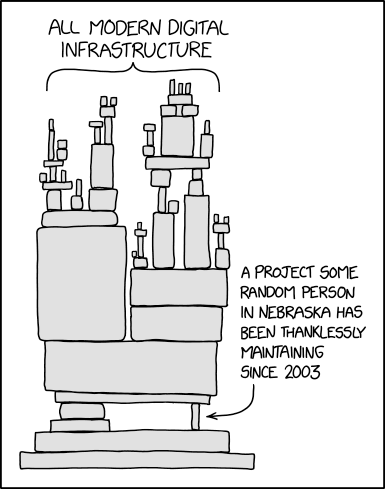
At the helm of this project is one individual. One guy. Paul Eggert, a computer scientist who teaches at the Department of Computer Science at the University of California's LA Campus... This is a man, after all, whose codebase helps hundreds of millions of users know what time zone they're in and who — for the past ten years — has gone to bed knowing that hundreds of millions of computers are using his code to know what time zone they're in. He's lived under that pressure for over a decade. And by all accounts thrived... Untold millions have been made by startups announcing dubious advents upon existing technologies heralded with the breathless fanaticism of companies announcing that they have found a way to turn air water into oil. Many of these will vanish into oblivion within a few short years. The time zone database won't. Because it can't. And those at the very bottom of the tech stack — those tirelessly and thanklessly maintaining open source projects upon which so much of the world's computing derives — languish in comparable obscurity...

In recent years, the project has fallen under the purview of ICANN [through its Internet Assigned Numbers Authority]. Its code reads like a cross between a JSON file and a historical novel. And while I'm sure the project has many noteworthy contributors, there's ultimately one guy who's responsible for maintaining it.

The Time Zone King. His name is Paul Eggert. And he's a computer scientist based out of UCLA. We probably all owe him a 'thank you'.

Facebook

Former Facebook Staffers React to Company's Unapologetic Response to Whistleblower (protocol.com) 70

"Facebook's efforts to undermine the testimony of whistleblower Frances Haugen began before she even left the Senate Commerce Committee hearing room Tuesday," reports Protocol.com: "Just pointing out the fact that @FrancesHaugen did not work on child safety or Instagram or research these issues and has no direct knowledge of the topic from her work at Facebook," spokesperson Andy Stone said in a tweet that ended up being read aloud by Republican Sen. Marsha Blackburn, during the hearing. Another statement from Policy Communications Director Lena Pietsch referred to Haugen dismissively as someone who "worked for the company for less than two years, had no direct reports" and "never attended a decision-point meeting with C-level executives."

For Nu Wexler, a former Facebook policy communications staffer, the anti-Haugen spin was overkill. "The statement they put out about Frances Haugen was beyond the pale," said Wexler, who also worked in policy communications at Google and Twitter. "As a former employee, I disagreed with what they said, and as a communications professional, I think it was really bad PR." The counterattack strategy has differed dramatically from the regretful responses Facebook has offered in past episodes, like the Cambridge Analytica scandal. In those cases, the company often responded with an apology and a plan. This time around, from Mark Zuckerberg on down, the company has been decidedly less apologetic, with Haugen as a case study for the new approach.

For some former Facebook employees watching from home, the experiment in public aggression is backfiring. From Wexler's point of view, Haugen demonstrated clear facility of the facts and familiarity with the industry. "They're going to have a hard time convincing people that she doesn't know what she's talking about," he said. Katie Harbath, a public policy director at Facebook for 10 years who left the company in March, said, "All these folks, whether they had direct reports or not, they all have perspective and expertise that should be heard...." Another former Facebook communications staffer called the company's response "a mistake." "It's not about her. The whole dialogue that's happening is not about whether she's a credible messenger or not," the former staffer said, before adding, "She is a pretty credible messenger...."

The remarks from Stone and Pietsch have also prompted former employees, some of whom held more senior roles during their time at Facebook, to publicly rally to Haugen's defense. "Well I was there for over 6 years, had numerous direct reports, and led many decision meetings with C-level execs, and I find the perspectives shared on the need for algorithmic regulation, research transparency, and independent oversight to be entirely valid for debate," tweeted Samidh Chakrabarti, who founded the civic integrity team Haugen worked on, and whose breakup she noted in her Senate testimony....

Facebook didn't respond to a question about why it's taking such an unapologetic approach toward Haugen's disclosures.

Harbath has a theory: "The other one wasn't working."

Microsoft

The Best Part of Windows 11 Is Its Linux, Argues Ars Technica (arstechnica.com) 148

The best part of Windows 11 is Linux, argues Ars Technica: For years now, Windows 10's Windows Subsystem for Linux has been making life easier for developers, sysadmins, and hobbyists who have one foot in the Windows world and one foot in the Linux world. But WSL, handy as it is, has been hobbled by several things it could not do. Installing WSL has never been as easy as it should be — and getting graphical apps to work has historically been possible but also a pain in the butt that required some fairly obscure third-party software. Windows 11 finally fixes both of those problems. The Windows Subsystem for Linux isn't perfect on Windows 11, but it's a huge improvement over what came before.

Microsoft has traditionally made installing WSL more of a hassle than it should be, but the company finally got the process right in Windows 10 build 2004. Just open an elevated Command prompt (start --> type cmd --> click Run as Administrator), type wsl --install at the prompt, and you're good to go. Windows 11, thankfully, carries this process forward unchanged. A simple wsl --install with no further arguments gets you Hyper-V and the other underpinnings of WSL, along with the current version of Ubuntu. If you aren't an Ubuntu fan, you can see what other easily installable distributions are available with the command wsl --list --online. If you decide you'd prefer a different distro, you can install it instead with — for example — wsl --install -d openSUSE-42. If you're not sure which distribution you prefer, don't fret. You can install as many as you like, simply by repeating wsl --list --online to enumerate your options and wsl --install -d distroname to install whichever you like. Installing a second distribution doesn't uninstall the first; it creates a separate environment, independent of any others. You can run as many of these installed environments as you like simultaneously, without fear of one messing up another.

In addition to easy installation, WSL on Windows 11 brings support for both graphics and audio in WSL apps. This isn't exactly a first — Microsoft debuted WSLg in April, with Windows 10 Insider Build 21364. But Windows 11 is the first production Windows build with WSLg support. If this is your first time hearing of WSLg, the short version is simple: you can install GUI apps — for example, Firefox — from your Ubuntu (or other distro) command line, and they'll work as expected, including sound. When I installed WSLg on Windows 11 on the Framework laptop, running firefox from the Ubuntu terminal popped up the iconic browser automatically. Heading to YouTube in it worked perfectly, too, with neither frame drops in the video nor glitches in the audio....

[T]here is one obvious "killer app" for WSLg that has us excited — and that's virt-manager, the RedHat-originated virtualization management tool. virt-manager is a simple tool that streamlines the creation, management, and operation of virtual machines using the Linux Kernel Virtual Machine... virt-manager never got a Windows port and seems unlikely to. But it runs under WSLg like a champ.

They reported a few problems, like when running GNOME's Software Center app (and the GNOME shell desktop environment).

But "If you're already a Windows Subsystem for Linux (WSL) user, Windows 11 offers an enormously improved experience compared to what you're accustomed to from Windows 10. It installs more easily, makes more functionality available, and offers better desktop integration than older workarounds such as running MobaXTerm's X11 server."
Businesses

With Fewer Chips, Automakers Are Prioritizing High-Markup Vehicles, Offering Fewer Deals (msn.com) 62

When automakers were forced to make fewer vehicles with the chips they had available, Business Insider reports that "Naturally, they chose to prioritize those models that had the highest demand and made them the most money.

"At the same time, the reduction in the supply from all brands meant that dealers could make a sale without the traditional haggling over the vehicle's sticker price. The result has been a boon for automakers." Mark Wakefield, a consultant with AlixPartners in Detroit, told Bloomberg that US car companies were now making $3,000 more per car than average, as well as up to $10,000 more on certain pickups and SUVs.

One dealer who sells upgraded pickups in Ohio told Morning Brew that his dealership recently closed a deal in 52 minutes that would have taken four hours before the chip shortage. "The surprising part is the average selling price on those trucks is close to $100,000, and the consumer demand has still been sky-high," the dealer said.

Jim Farley, Ford's CEO, said in June that this new pricing power was "breathtaking" and indicated that the company wouldn't be returning to the days of guessing over how many cars it should produce and then marking them down until they sell. Mary Barra, GM's CEO, has also said that customer orders will play a larger role in her company's production strategy. Kevin Tynan, an auto analyst for Bloomberg, told Insider earlier this year that the industry has been trying to get off the incentives and discounting model for decades. "They don't totally hate this," he said, referring to the shortages. "Moving forward you're probably going to get an industry more like what we're seeing now, where supply is a little bit more managed, and incentives are not as aggressive as they've been."

The article summarizes the prediction of the Bloomberg auto analyst: "Good news for automakers and investors, but that also means consumers can expect to continue to see fewer options, higher prices, and a tighter used-vehicle market going forward."
Government

US Flight Traffic Controllers Complain Military Tests Interfered with GPS Signals (ieee.org) 52

IEEE Spectrum reports that air traffic controllers for America's Federal Aviation Administration "were confused and frustrated by an increase in military tests that interfered with GPS signals for civilian aircraft, public records show."

The incidents happened for controllers supervising flights over Arizona, New Mexico and Texas, according to their report (shared by Slashdot reader schwit1): In March and April this year, flight controllers at the Albuquerque Air Route Traffic Control Center filed reports on NASA's Aviation Safety Reporting System (ASRS), a forum where aviation professionals can anonymously share near misses and safety tips. The complaints accused the FAA of denying controllers permission to ask the military to cut short GPS tests adversely affecting commercial and private aircraft. These so-called "stop buzzer" (or "cease buzzer") requests are supposed to be made by pilots only when a safety-of-flight issue is encountered. "Aircraft are greatly affected by the GPS jamming and it's not taken seriously by management," reads one report. "We've been told we can't ask to stop jamming, and to just put everyone on headings."

In a second report, a private jet made a wrong turn into restricted airspace over the White Sands Missile Range in New Mexico after being jammed. On that occasion, the air traffic controller called a stop buzzer. "[The] facility manager on duty later informed me we can't ask them to 'stop buzzer' and to just keep putting aircraft on headings," their ASRS report reads. Putting an aircraft on headings requires giving pilots precise bearings to follow, rather than letting them perform their own navigation using GPS or other technologies. This adds work for controllers, who are already very busy at certain times of day...

The Pentagon uses its more remote military bases, many in the American West, to test how its forces operate under GPS denial. A Spectrum investigation earlier this year discovered that such jamming tests are far more prevalent than had previously been thought, possibly affecting thousands of civilian flights each year.

GNU is Not Unix

FSF Warns Windows 11 'Deprives Users of Freedom and Digital Autonomy' (fsf.org) 121

"October 5 marks the official release of Windows 11, a new version of the operating system that doesn't do anything at all to counteract Windows' long history of depriving users of freedom and digital autonomy," writes Free Software Foundation campaigns manager Greg Farough.

"While we might have been encouraged by Microsoft's vague, aspirational slogans about community and togetherness, Windows 11 takes important steps in the wrong direction when it comes to user freedom." Microsoft claims that "life's better together" in their advertising for this latest Windows version, but when it comes to technology, there is no surer way of keeping users divided and powerless than nonfree softwarechoosing to create an unjust power structure, in which a developer knowingly keeps users powerless and dependent by withholding information. Increasingly, this involves not only withholding the source code itself, but even basic information on how the software works: what it's really doing, what it's collecting, and how often it's snitching on users. "Snitching" may sound dramatic, but Windows 11 will now require a Microsoft account to be connected to every user account, granting them the ability to correlate user behavior with one's personal identity. Even those who think they have nothing to hide should be wary of sharing potentially all of their computing activity with any company, much less one with a track record of abuse like Microsoft...

We expect Microsoft to use its tighter control on cryptography that happens in Windows as a way to impose more severe Digital Restrictions Management (DRM) onto media and applications, and as a way to ensure that no application can run in Windows without Microsoft's approval. In cases like these, it's no longer appropriate to call a machine running Windows a "personal" computer, as it obeys Microsoft more than it does its user. Indeed, it's bitterly ironic that Microsoft is calling the program that verifies a system's compatibility with Windows 11 a "PC Health Check." We counter that a healthy PC is one that respects its user's wishes, runs free software, and doesn't purposefully restrict them through treacherous computing. It would also never send the user's encryption keys back to its corporate overlords. Intrepid users will likely find a way around this requirement, yet it doesn't change the fact that the majority of Windows users will be forced into a treacherous computing scheme...

Sometimes, Microsoft realizes that it can't be quite so overtly antisocial. We've commented many times before on the hypocrisy involved in saying that Microsoft "loves open source" and "loves Linux," two ways of mentioning free software without reference to freedom. At the same time, Microsoft employees do make contributions to free software, contributions which benefit many others. Yet they do not extend this philosophy to their operating system, and in the last few years, they've made an attempt to impair the ways free software makes "life better together" further by making critical functions of Microsoft GitHub rely on nonfree JavaScript and directing users toward Service as a Software Substitute (SaaSS) platforms. By attacking user freedom through Windows, and the free software community directly by means of nonfree JavaScript, Microsoft proves that it has no plans to loosen its grip on users.

No program that you're forbidden to copy, modify, or share can truly bring people "together" in the way that Microsoft claims.

Thankfully, and right outside the window, there's a true community of users you and your loved ones can join...

Let's stop falling for the trap of chasing short-term, superficial improvements in proprietary software that may seem to make life better, and instead opt for free software, the only software that can support the best versions of ourselves.

The post urges readers to sign (or renew!) their pledge not to use Windows and to help a friend install GNU/Linux, "sending Microsoft the strong message that software that subjugates its users has no place in Windows.... If you don't feel ready to take the plunge and switch entirely, you can use our resources like the Free Software Directory to find programs you can use as starting points for your free software journey."

The post also has harsh words for TPM, warning that "when it's deployed by a proprietary software company, its relationship to the user isn't one based on trust, but based on treachery. When fully controlled by the user, TPM can be a useful way to strengthen encryption and user privacy, but when it's in the hands of Microsoft, we're not optimistic."

And when it comes to Microsoft teams, "it seems that no Windows user can avoid it any longer.... we hope Teams' unpopularity and its newfound, unwanted place in Windows will encourage users to seek out conferencing programs that they themselves can control."
Firefox

Firefox Now Sends Your Address Bar Keystrokes To Mozilla (howtogeek.com) 139

An anonymous reader quotes a report from How-To Geek: Firefox now sends more data than you might think to Mozilla. To power Firefox Suggest, Firefox sends the keystrokes you type into your address bar, your location information, and more to Mozilla's servers. Here's exactly what Firefox is sharing and how to control it. This change was made as part of the introduction of Firefox Suggest in Firefox 93, released on October 5, 2021. As part of Firefox Suggest, Firefox is getting ads in your search bar -- but that's not the only thing that will be news to longtime Firefox users. According to Mozilla, "Firefox Suggest acts as a trustworthy guide to the better web, surfacing relevant information and sites to help people accomplish their goals." In reality, what that means is, when you start typing in your address bar, you won't just see the standard search suggestions from Google or your current search default engine. You'll also see "Firefox Suggest" results pointing to web pages. Some of them are sponsored ads, but you can disable the ads.

Firefox Suggest is on by default. Mozilla's blog post on the subject says Firefox Suggest is an "opt-in experience," which was the case in September 2021 -- but it's now enabled by default in Firefox 93. However, as of Firefox 93's release in October 2021, Firefox Suggest is only enabled in the USA -- for now. It's worth noting that, for many years, Firefox and other web browsers have had search suggestions in their address bar. So, when you start typing "win" in your address bar, you may see suggestions for "Windows 11" and "Window repair." This is accomplished by sending keystrokes to your default search engine as you type in the search bar, as Mozilla's support site explains. Mozilla is also providing contextual suggestions, for which it needs more data, including the city you're located in and whether you're clicking its suggestions.

You can disable Firefox's suggested results, if you like. This will stop Mozilla from collecting the data you type in your search bar, and it will also disable the suggested results and ads. To do so, open Firefox and click menu [and then] Settings. Select "Privacy [and] Security" in the left pane, and scroll down to "Address Bar -- Firefox Suggest." Disable "Contextual suggestions" and "Include occasional sponsored suggestions" to stop Firefox from sending data to Mozilla.

Google

Google Warns 14,000 Gmail Users Targeted By Russian Hackers (bleepingcomputer.com) 13

Google has warned about 14,000 of its users about being targeted in a state-sponsored phishing campaign from APT28, a threat group that has been linked to Russia. BleepingComputer reports: Shane Huntley, who is at the helm of Google's Threat Analysis Group (TAG) that responds to government-backed hacking, notes that the higher-than-usual number of alerts this month comes from "from a small number of widely targeted campaigns which were blocked." The campaign from APT28, also known as Fancy Bear, lead to a larger number of warnings for Gmail users across various industries. In a statement sent by a Google spokesperson, Huntley says that Fancy Bear's phishing campaign accounts for 86% of all the batch warnings delivered this month. He explains that these notifications indicate targeting of the recipient, not a compromise of their Gmail account: "So why do we do these government warnings then? The warning really mostly tells people you are a potential target for the next attack so, now may be a good time to take some security actions."

Huntley says that these warnings are normal for individuals such as activists, journalists, government officials, or people that work national security structures because that's who government-backed entities are targeting. All the phishing emails from the Fancy Bear campaign were blocked by Gmail and did not land in the users' inboxes as they were automatically classified as spam. "As we've previously explained, we intentionally send these notices in batches, rather than at the moment we detect the threat itself, so that attackers cannot track some of our defense strategies," Huntley said.

AI

The Rise of the Robo-Voices (wsj.com) 54

The next time you see a movie or TV show that was dubbed from a foreign language, the voices you hear may not belong to actors who rerecorded dialogue in a sound booth. In fact, they may not belong to actors at all. From a report: Highly sophisticated digital voice manufacturing is coming, and entertainment executives say it could bring a revolution in sound as industry-changing as computer graphics were for visuals. New companies are using artificial intelligence to create humanlike voices from samples of a living actor's voice -- models that not only can sound like specific performers, but can speak any language, cry, scream, laugh, even talk with their mouths full. At the same time, companies are refining the visual technology so actors look like they are really speaking.

As streaming services export American fare globally and foreign markets send their hits to the U.S., dubbing is a bigger business than ever. But the uses of synthetic voices extend well beyond localizing foreign films. AI models can provide youthful voices for aging actors. The technology can resurrect audio from celebrities who have died or lost the ability to speak. And it can tweak dialogue in postproduction without the need for actors. All the tinkering raises thorny ethical questions. Where is the line between creating an engrossing screen experience and fabricating an effect that leaves audiences feeling duped?

The technology is set to hit a new target in the coming months, when foreign-language dubbed versions of the 2019 indie horror movie "Every Time I Die" are released in South America. Those versions mark one of the first times entire dubbed movies use computerized voice clones based on the voices of the original English-speaking cast. So when the film comes out abroad, audiences will hear the original actors "speaking" Spanish or Portuguese. Deepdub created the replicas based on 5-minute recordings of each actor speaking English.

Facebook

Facebook Says Some of Its Services Are Having Issues Again (theverge.com) 32

Instagram has been experiencing issues for many of us here at The Verge, but it turns out that the problem might be broader than that, according to a statement from Facebook. From a report: "We're aware that some people are having trouble accessing our apps and products," Facebook said in a tweet. "We're working to get things back to normal as quickly as possible and we apologize for any inconvenience."
Facebook

Facebook Bans Developer Behind Unfollow Everything Tool (theverge.com) 84

A developer who made a tool that let people automatically unfollow friends and groups on Facebook says he's been banned permanently from the social networking site. From a report: Louis Barclay was the creator of "Unfollow Everything," a browser extension that allowed Facebook users to essentially delete their News Feed by unfollowing all their connections at once. Facebook allows users to individually unfollow friends, groups, and pages, which removes their content from the News Feed, the algorithmically-controlled heart of Facebook. Barclay's tool automated this process, instantly wiping users' News Feed.

[...] In response, Facebook sent Barclay a cease-and-desist letter earlier this year, saying he'd violated the site's terms of service by creating software that automated user interactions. Barclay says the company then "permanently disabled my Facebook and Instagram accounts" and "demanded that I agree to never again create tools that interact with Facebook or its other services."

Slashdot Top Deals